



Documentation [Martiri coreane (Maria Matilde del SS. Sacramento e 1 Compagna)]
PLEASE NOTE
1) In order to be able to consult the Positio please fill in the request form on this page.
2) If your request is accepted, we will then send you the conditions and directions for consulting the document.
Procedure - Martiri coreane (Maria Matilde del SS. Sacramento e 1 Compagna)
1. The canonical norms concerning the procedure to be followed in the Causes of Saints are stated in the Apostolic Constitution Divinus Perfectionis Magister promulgated by John Paul II on 25 January 1983 (AAS LXXV, 1983, 349-355).
2. To initiate a Cause it is necessary that at least five years pass after the death of the candidate. This is to allow for greater balance and objectivity in the evaluation of the case and to allow the emotions of the moment to decant. There must be a clear conviction among people about his/her sanctity (fama sanctitas) and about the efficacy of his/her intercession with the Lord (fama signorum).
Martiri coreane (Maria Matilde del SS. Sacramento e 1 Compagna)
SISTER THERESE OF THE INFANT JESUS (IRENE BASTIN)
Irene Bastin was born on 5 July 1901 at Saint Vinvent in Luxembourg. Her family was Christian.
At the outbreak of the First World War both her parents were arrested and Irene looked after the entire family all during the difficult war years.
After the war, on 16 July 1919, she entered the Carmelite Order and was given the religious name of Therese of the Infant Jesus. She lived her consecrated life with outstanding fervour for 20 years in Virton.
The 7 May 1940, Sister Therese was transferred to the Convent of Seoul in Korea and on 17 October 1949 was elected Sub-Prioress there. The Korean War broke out the following year. All the priests and nuns were arrested and deported to the concentration camp in Pyeongyang.
From there they were moved to Junggang-jin. During this arduous and cold journey, Therese accompanied and assisted Sister Mary Mechtilde. She herself became ill and a few days after the death of Mechtilde, she too died. It was the 29 November 1950 and she was just 49 years old.
SISTER MECHTILDE OF THE BLESSED SACRAMENT (DEVRIESE)
Godelieve Devriese was born in Flanders (Belgium) on 12 February 1889. She was brought up by her mother alone and worked as a seamstress with her sisters.
As Godelieve grew older she became enamoured of the spiritual life and entered the Carmelite Order at Ypres on 21 November 1906. Her name in religion became Sister Mary Mechtilde of the Blessed Sacrament. She made her Profession on 14 December 1908. She was a very discerning woman and delighted at being at the service of others in a spirit of fraternal/sisterly love.
When the convent of Ypres was closed due to the First World War, Mechtilde transferred to the convent in Aire sur l’Adour (France). Two years later she moved to Turkey, but again due to the war, that convent was also closed down. She returned to France where she was elected Prioress for 6 years.
When she had terminated her term as Prioress and in response to a request from the Korean church that some Carmelite Nuns might be sent to their country, Mechtilde and a Sister Mary Madeleine departed for Korea in 1939. She learned the Korean language with the Pauline Sisters in Seoul and, on 25 March 1940, she founded the first Carmelite monastery there.
In 1949 she passed on the role of Prioress to Sister Marie Therese and the Korean War broke out the following year. Mechtilde had already lived through 2 wars and moved residences, but this time she decided to remain where she was, trusting in God’s will.
On 15 July 1950, she, with the priests and other sisters, was arrested by the North Korean military. They were condemned and transferred to the concentration camp in Pyeongyang. Mechtilde developed pneumonia from the cold and exhausting journey, but particularly from the ill-treatment at the hands of the military.
On their arrival at Hachang-li, despite the care of Sr. Marie Therese, Mechtilde, died as her fellow Christians prayed, on the 18 November 1950.
Links - Adeodato di S. Pietro

Procedure - Adeodato di S. Pietro
1. The canonical norms concerning the procedure to be followed in the Causes of Saints are stated in the Apostolic Constitution Divinus Perfectionis Magister promulgated by John Paul II on 25 January 1983 (AAS LXXV, 1983, 349-355).
2. To initiate a Cause it is necessary that at least five years pass after the death of the candidate. This is to allow for greater balance and objectivity in the evaluation of the case and to allow the emotions of the moment to decant. There must be a clear conviction among people about his/her sanctity (fama sanctitas) and about the efficacy of his/her intercession with the Lord (fama signorum).
Documentation [Adeodato di S. Pietro]
PLEASE NOTE
1) In order to be able to consult the Positio please fill in the request form on this page.
2) If your request is accepted, we will then send you the conditions and directions for consulting the document.
[No form id or name provided!]
Adeodato di S. Pietro
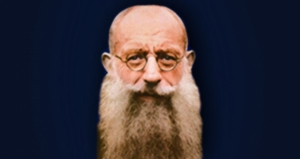
The Rev. Father Adeodatus of St. Peter, after being ordained a priest on July 31, 1927, left for India a few weeks later.
He arrived at Carmel Hill Monastery, Trivandrum, on November 1, 1927. As a passionate religious priest, he helped the community in the formation of the first groups of native Carmelites, as bursar of the community and involved in various pastoral and spiritual ministries. Later he chose to devote himself to missionary activities and from 1946 he was parish priest of the Parish of Muthiyavila, which included a large geographical area then under the diocese of Trivandrum, which is currently part of the diocese of Neyyattinkara. He died as a zealous missionary on October 20, 1968, on mission Sunday, while on his way to celebrate Holy Mass. His mortal remains were exhumed and transferred to the tomb next to Archbishop Benziger.
On October 13, 2018, at the episcopal residence of Neyyattinkara, the diocesan Inquiry on his "life, virtue and reputation of holiness" began.
Víctor Rodríguez Martínez
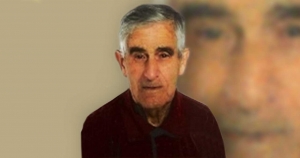
Víctor Rodriguez was born on April 12, 1925 in Quintanadiez de la Vega (Palencia, Spain), into a solidly Christian family. At the age of two he had an experience of grace that marked his whole life. For the rest, his childhood passed normally and his youth was that of a responsible and hardworking boy. Family circumstances, in particular the death of his brother Natalio during the civil war, led him to help his father from the age of 14 in the agricultural work typical of adults.
On July 24, 1948, he married María Asunción. To get ahead with his new home, he continued to work with his father, but at the same time, to increase his income, he began to raise laying hens with excellent results. The business was so profitable that he was soon able to expand the warehouses, opening a feed and egg shop in Medina del Campo and another in Madrid. At the height of the abundance, in 1966, there was a national crisis in the poultry industry that hit it brutally. So he lost everything and had to auction off his assets to satisfy his debts to creditors. He understood then that everything could fail except God and that was the key moment of his conversion.
He moved with his family from Medina del Campo to Madrid, where he found a job as a worker in the Pepsi-Cola bottling factory, quickly gaining the trust of his colleagues, to the point of being soon chosen as their «representative» before the company. On the other hand, he also took advantage of the influence he had on his companions, to bring many closer to the Lord, especially through the Cursillos of Christianity. His words about the Lord and his behaviour earned him the nickname «Father Victor.»
In 1986 he was granted temporary disability for ischemic heart disease and in April 1988 there was talk of permanent disability for "possible Alzheimer's disease". He decided to go and live in Velillas del Duque (Palencia) where his wife had inherited her parents' house. There, he found a quieter and more serene environment, conducive to physical recovery. Thus he spent the most serene 12 years of his life, dedicating himself intensely and totally to prayer and the apostolate. But Alzheimer's disease progressed and the family decided to return to Medina del Campo in search of the medical care that could not be had in Velillas del Duque. A year and a half before his death, when the disease was very advanced and his parents could no longer sustain the care he needed, they decided to take him to the Red Cross Day Centre, where he died at dawn on February 21, 2012.
Throughout his life Victor loved Carmel, making his profession as a secular Discalced Carmelite. Following its founders St. Teresa of Jesus and St. John of the Cross, he distinguished himself for being a man of prayer, through a profound experience of God and a special love for Mary. In his great love for the Eucharist, he also decided to enrol in nocturnal Adoration, without ever missing the appointment, on the evening of the 21st of each month. In addition, he was a secular member of the Congregation of St. Philip Neri. Finally, he belonged to the Cursillos de Cristiandad.
Links - Víctor Rodríguez Martínez
Documentation [Víctor Rodríguez Martínez]
PLEASE NOTE
1) In order to be able to consult the Positio please fill in the request form on this page.
2) If your request is accepted, we will then send you the conditions and directions for consulting the document.
[No form id or name provided!]
Last News

Venerable Jean-Thierry of the Child Jesus and the …
June 17, 2026

Venerable Maria Eletta di Gesù
June 17, 2026

Venerable Maria Teresa of the Most Holy Trinity (Y…
June 17, 2026

Blessed Anna of Saint Bartholomew
June 10, 2026

Martyrs of Santander
May 27, 2026
