



Documentation [Teresa di Gesù (Gimma)]
PLEASE NOTE
1) In order to be able to consult the Positio please fill in the request form on this page.
2) If your request is accepted, we will then send you the conditions and directions for consulting the document.
Teresa Camilla di Gesù Bambino
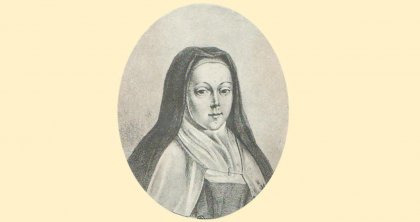
Thérèse Camille of the Child Jesus was born in France in 1757, the daughter of the Marquis de Soyécourt.
At the age of 16 she decided to enter a monastery, but had to face opposition from her parents who wanted her to marry. She waited until she came of age to enter Carmel.
The beginnings of monastic life were hard, being an austere life.
In 1792, during the French revolution, the nuns were expelled from their convent. They settled in small groups in apartments and continued their monastic life. Many were arrested, including Sr Thérèse Camille, who was released after a period of imprisonment. At the end of this forced exile she returned to Paris and founded an underground religious community.
In 1796, her whole family having died during the revolution, she inherited the properties and began to finance in many ways the clergy, the nuns out of prison or in conditions of poverty. In 1797, she bought the Carmelite convent and installed her «clandestine» convent there, which would become «the fulcrum of all French Carmel».
For supporting Pope Pius VII and the «black» cardinals, Mother Camille was exiled at Napoleon Bonaparte’s pleasure from 1811 to 1813. Back in Paris, she continued her work to restore Carmel and support the clergy, as well as other religious communities. In 1845 she sold the Carmelite convent to the Archbishop of Paris and settled with her sisters in a new convent founded especially for them.
She died on May 9, 1849, at the age of 91.
The Diocesan Inquiry into her «life, virtue and reputation for holiness» was opened in 1938.
Procedure - Teresa Camilla di Gesù Bambino
1. The canonical norms concerning the procedure to be followed in the Causes of Saints are stated in the Apostolic Constitution Divinus Perfectionis Magister promulgated by John Paul II on 25 January 1983 (AAS LXXV, 1983, 349-355).
2. To initiate a Cause it is necessary that at least five years pass after the death of the candidate. This is to allow for greater balance and objectivity in the evaluation of the case and to allow the emotions of the moment to decant. There must be a clear conviction among people about his/her sanctity (fama sanctitas) and about the efficacy of his/her intercession with the Lord (fama signorum).
Links - Teresa Camilla di Gesù Bambino

Documentation [Teresa Camilla di Gesù Bambino]
PLEASE NOTE
1) In order to be able to consult the Positio please fill in the request form on this page.
2) If your request is accepted, we will then send you the conditions and directions for consulting the document.
[No form id or name provided!]
Procedure - Salvatore del Cuore Immacolato di Maria
1. The canonical norms concerning the procedure to be followed in the Causes of Saints are stated in the Apostolic Constitution Divinus Perfectionis Magister promulgated by John Paul II on 25 January 1983 (AAS LXXV, 1983, 349-355).
2. To initiate a Cause it is necessary that at least five years pass after the death of the candidate. This is to allow for greater balance and objectivity in the evaluation of the case and to allow the emotions of the moment to decant. There must be a clear conviction among people about his/her sanctity (fama sanctitas) and about the efficacy of his/her intercession with the Lord (fama signorum).
Links - Salvatore del Cuore Immacolato di Maria
Documentation [Salvatore del Cuore Immacolato di Maria]
PLEASE NOTE
1) In order to be able to consult the Positio please fill in the request form on this page.
2) If your request is accepted, we will then send you the conditions and directions for consulting the document.
[No form id or name provided!]
Salvatore del Cuore Immacolato di Maria
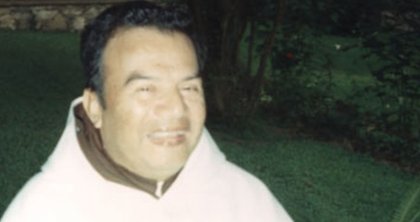
Salvador Riviera Garcia was born in Salvatierra, Guanajuato (Mexico) on June 27, 1934.
Like everyone else, he was a lively and playful child, but also very intelligent and willing to help. As a boy, he began to show signs of his missionary vocation, because for 12 years he helped with the catechism. At the age of 14 he entered the Discalced Carmelites in Toluca, Mexico State, then made his novitiate in Querétaro.
He travelled to Washington, D.C., for a year. He was ordained on June 29, 1960. In 1962-1963 he studied in Rome; in 1965 he went to the mission of Tamazula, Durango, and then to Tayoltita, a mining town where his life was radically changed.
Due to an accident that occurred on May 15, 1969, in Tayoltita, Durango, he was left a quadriplegic. This incident rather than being an obstacle, became a new opportunity that God gave him to move forward with his apostolate and talk about the teachings of our Catholic faith.
In June 1971 he was transferred to Mexico City. He attended the Mexican Institute of Rehabilitation (IMR) for physical rehabilitation. During his time at IMR, he exchanged experiences with other people with disabilities and gave spiritual support.
In June 1972, a Jesuit priest named Alfredo Martín Gallegos, of the Christian Fraternity of the Sick, a group born in 1942 in France, arrived in Mexico City and invited Father Chavita to join the movement. From that meeting was born the great work of Father Chavita, the Fraternity of the Sick and those with mobility difficulties, and groups began to be formed in various cities and states of Mexico. Father Chavita from 1976 continued his incessant activity as a consultant for the Fraternity, without ever neglecting his duties as a priest and Carmelite friar.
He died on December 21, 1997.
The Diocesan Inquiry into his «Life, Virtue and Reputation for Holiness» was opened on March 19, 2007 at the Archdiocese of Guadalajara.
Procedure - Rufino della Vergine del Carmelo
1. The canonical norms concerning the procedure to be followed in the Causes of Saints are stated in the Apostolic Constitution Divinus Perfectionis Magister promulgated by John Paul II on 25 January 1983 (AAS LXXV, 1983, 349-355).
2. To initiate a Cause it is necessary that at least five years pass after the death of the candidate. This is to allow for greater balance and objectivity in the evaluation of the case and to allow the emotions of the moment to decant. There must be a clear conviction among people about his/her sanctity (fama sanctitas) and about the efficacy of his/her intercession with the Lord (fama signorum).
Last News

Venerable Jean-Thierry of the Child Jesus and the …
June 17, 2026

Venerable Maria Eletta di Gesù
June 17, 2026

Venerable Maria Teresa of the Most Holy Trinity (Y…
June 17, 2026

Blessed Anna of Saint Bartholomew
June 10, 2026

Martyrs of Santander
May 27, 2026
