



Procedure - Maddalena di San Giuseppe
1. The canonical norms concerning the procedure to be followed in the Causes of Saints are stated in the Apostolic Constitution Divinus Perfectionis Magister promulgated by John Paul II on 25 January 1983 (AAS LXXV, 1983, 349-355).
2. To initiate a Cause it is necessary that at least five years pass after the death of the candidate. This is to allow for greater balance and objectivity in the evaluation of the case and to allow the emotions of the moment to decant. There must be a clear conviction among people about his/her sanctity (fama sanctitas) and about the efficacy of his/her intercession with the Lord (fama signorum).
Giovanni di Gesù Maria (Galaguritano)
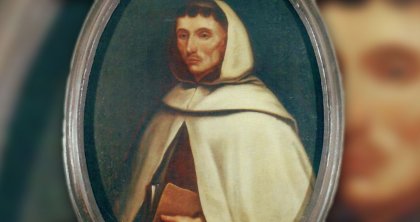
John of Jesus Mary was born in the town of Calahorra in Spain on January 27, 1564 to Diego de San Pedro and Anna De Ustarroz.
At the university of Alcalà de Henares, together with studies in philosophy and theology he specialized in Latin and Greek, becoming an elegant Latinist, an excellent dialectician in school controversies as well as an expert in the Hebrew language.
In 1582, he entered the Discalced Carmelite novitiate in Pastrana, taking the name of John of Jesus Mary and on January 23, 1583 he made his profession. In 1584 he was sent to Italy in the newly established community of Genoa; here he was ordained a priest in 1590. First in Genoa, then in Rome, he was master of novices, a position that marked the ministry of his whole life. In 1584 he was sent to Rome as Master of novices and in 1597 he was commissioned to revise the constitutions and laws of the Order, after Clement VIII had made the Italian branch independent of the Spanish one.
In the General Chapter of 1605, John of Jesus Mary was elected General Counsellor and Master of novices. In that of 1608, he was elected Procurator General of the Order. In this office he carried out the cause of canonization of Mother Teresa of Jesus, of whom he was one of the first biographers.
In the General Chapter of 1611, celebrated in Montecompatri, John of Jesus Mary was elected Superior General. During his generalate the "Mission Seminary" was established, first at the small Church of Saint Paul in the Sallustian gardens of Rome (today Santa Maria della Vittoria), later transferred to the Basilica of St Pancrazio outside the walls. Thanks to the fruits of this Seminary, the Discalced Carmelites were able to open houses in Ormutz, in the Persian Gulf, in Tatta, at the mouth of the Indus, in Goa, England (1614), Paris, Louvain, Lviv (in 1613, with the aim of helping reconciliation of the Ruthenians with Rome), Cologne, Milan (1622), Bologna.
At the end of his mandate as Superior General and foreseeing that his end was nigh, he chose to retire to the splendid solitude of Montecompatri. There he died on 28th of May, 1615.
On 7th of May 1999, the decree of validity of the Diocesan Inquiry into the "life, virtue and fame for holiness" was granted.
On November 25, 2021, the decree of his heroic virtue was promulgated.
Documentation [Giovanni di Gesù Maria (Galaguritano)]
PLEASE NOTE
1) In order to be able to consult the Positio please fill in the request form on this page.
2) If your request is accepted, we will then send you the conditions and directions for consulting the document.
Links - Giovanni di Gesù Maria (Galaguritano)

Procedure - Giovanni di Gesù Maria (Galaguritano)
1. The canonical norms concerning the procedure to be followed in the Causes of Saints are stated in the Apostolic Constitution Divinus Perfectionis Magister promulgated by John Paul II on 25 January 1983 (AAS LXXV, 1983, 349-355).
2. To initiate a Cause it is necessary that at least five years pass after the death of the candidate. This is to allow for greater balance and objectivity in the evaluation of the case and to allow the emotions of the moment to decant. There must be a clear conviction among people about his/her sanctity (fama sanctitas) and about the efficacy of his/her intercession with the Lord (fama signorum).
Giovanni Vincenzo di Gesù Maria
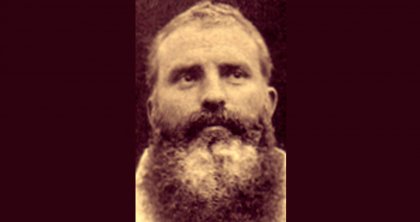
John Vincent of Jesus Mary was born in Bérriz (Vizcaya – northern Spain) in 1862.
Of noble and austere Basque lineage of soldiers, educated in a family full of affection, while still a boy he broke away from everything and everyone to climb Mount Carmel.
His steps, one after the other, can only induce astonishment: an intelligent student and fervent novice, an ardent priest and paternal superior, a missionary in lands, then almost inaccessible, travelling on foot, in a canoe or on an oxen cart.
He was a scholar of Indian languages, prolific writer, compelling journalist, globetrotting mendicant, and, most importantly, a nocturnal adorer of the Eucharist and unceasing contemplative. A man of integrity and rigorous founder of a hermitage, quick off the mark with his perennial humour, he was an authentic son of Saint Teresa of Jesus.
He died at San Sebastian in 1943.
The decree on his heroic virtue was promulgated on the 12th of January 1996.
Documentation [Giovanni Vincenzo di Gesù Maria]
PLEASE NOTE
1) In order to be able to consult the Positio please fill in the request form on this page.
2) If your request is accepted, we will then send you the conditions and directions for consulting the document.
[No form id or name provided!]
Links - Giovanni Vincenzo di Gesù Maria
Procedure - Giovanni Vincenzo di Gesù Maria
1. The canonical norms concerning the procedure to be followed in the Causes of Saints are stated in the Apostolic Constitution Divinus Perfectionis Magister promulgated by John Paul II on 25 January 1983 (AAS LXXV, 1983, 349-355).
2. To initiate a Cause it is necessary that at least five years pass after the death of the candidate. This is to allow for greater balance and objectivity in the evaluation of the case and to allow the emotions of the moment to decant. There must be a clear conviction among people about his/her sanctity (fama sanctitas) and about the efficacy of his/her intercession with the Lord (fama signorum).
Francesco di Gesù Bambino
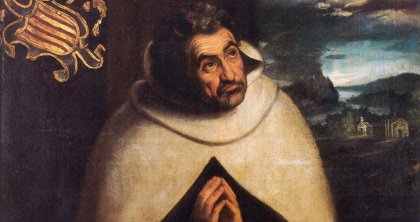
Francis of the Child Jesus was born in Villapalacios (Albacete - Spain) in 1544 and spent a youth full of hardships as a shepherd.
At the age of twenty he moved to Alcalá de Henares, where he entered the service of the hospital of Antezana; there he worked wonders of charity also confirmed by miracles, particularly through devotion to the Child Jesus, whom he had appointed as his agent and in whose name he asked for alms and help. From this incredible intimacy with the Holy Child, he acquired the name of Francis of the Child Jesus, which he then kept as his own name as a religious, and by this name he was also called by the kings and grandees of Spain, who loved and venerated him.
Moved by divine inspiration to become a Discalced Carmelite, he overcame the repeated resistance of the city of Alcalá and of Philip II himself, who had twice obtained from Rome a dispensation annulling the vow Francis had made to become a religious. On April 12, 1598 in Madrid, he received the habit as a lay brother, making his profession on April 13, the following year.
Later sent to Valenza, at the request of the court, he succeeded with the municipal authorities, to found - as he had done in Alcalá - the house of St. Gregory for converts (1600), supported by the archbishop St John de Ribera, who had already known him in Madrid and who venerated him as a saint. He also took him with him on pastoral visits during which Francis taught catechism and worked wonders. He saved Valenza from the plague, assisted many pious works, setting up there a "custom house of the Child Jesus", a wardrobe and warehouse where he collected what was necessary for his poor.
He was recalled under obedience to Madrid in December 1603. Shortly after, due to the continuous rush of people following Francis, the superiors, who did not view well his popularity and reputation for holiness and miracles that followed him, relegated him to the remote novitiate of Pastrana (Guadalajara) from where, for the same reason, he was transferred to the desert of Bolarque. But soon, besieged there by the crowds, he had to return to Pastrana and, finally, back to Madrid, followed everywhere by hordes of people.
To meet his superiors’ wishes, here he sought to escape from the faithful, in prayer and penance preparing himself for the death that he welcomed holily on December 26, 1604, exactly during the festivities for his Child Jesus.
On January 1, 1769, the decree on his heroic virtue was promulgated.
Last News

Venerable Jean-Thierry of the Child Jesus and the …
June 17, 2026

Venerable Maria Eletta di Gesù
June 17, 2026

Venerable Maria Teresa of the Most Holy Trinity (Y…
June 17, 2026

Blessed Anna of Saint Bartholomew
June 10, 2026

Martyrs of Santander
May 27, 2026
