



Francesco di Gesù
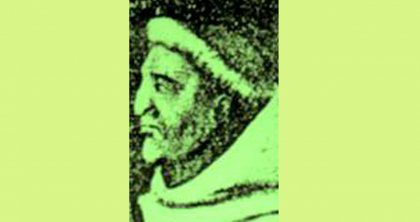
Francis of Jesus was born in Los Hinojosos (Cuenca - Spain) on October 4, 1529; around the age of 12, he was adopted by the knight Juan Molina and taken to Ubeda.
Around the age of fifteen years, he was in Baeza, a beloved disciple of St. John of Avila, who made him rector of the primary schools close to the university of the town, a duty he carried out in clerical dress for thirty years, making himself famous, above all, as a dotrinero or catechist, and then as a popular preacher, also a duty he carried out at the wish of St John.
In February 1575, he met Teresa of Jesus in Beas, who invited him to Carmel. He therefore made a vow in her hands to become a Discalced friar, which he could only accomplish a few years later, through the intervention of Fr. G. Gracián. In early March 1582, he wore the habit as a layman in Baeza, making his novitiate in Seville, where he was professed in March 1583. In 1584, with two other religious, he left for Congo-Angola, arriving in San Salvador in early December. There, in the same month, he was ordained a priest, celebrating his first Mass on February 2nd, 1585. He then began a tireless missionary ministry throughout the region, managing to convert many thousands of people with fiery preaching, endorsed by holiness of life and miracles, and by an extraordinary fervour that attracted him to the Eucharist and made him a living prayer.
He returned with his missionary companions to Spain in 1587, to convince his superiors to strengthen the number of apostles and to support their work. He was detained there and assigned to the Madrid monastery, where he became a highly esteemed and sought-after preacher and confessor.
He also carried out an apostolate in Barcelona and - for around four years - in Andalusia, everywhere working hard and leaving behind a reputation for great holiness. Even at the age of 76, he was sent to give a mission in Ubeda. On his return from Andalusia, he had a very serious accident, falling from his mount, which very quickly brought him close to death. He was taken to nearby Los Hinojosos where, after great sufferings endured in joy of spirit and prayer, he died on June 10, 1601, venerated by all as a great saint, for his Eucharistic ardour, his spirit of prayer, charity and mercy towards every kind of suffering in soul and body, for his love of the Virgin Mary, as well as his severe yet joyful penitential asceticism and his miracles.
On November 27, 1937, the decree approving his writings was granted.
Procedure Firmino della Natività
1. The canonical norms concerning the procedure to be followed in the Causes of Saints are stated in the Apostolic Constitution Divinus Perfectionis Magister promulgated by John Paul II on 25 January 1983 (AAS LXXV, 1983, 349-355).
2. To initiate a Cause it is necessary that at least five years pass after the death of the candidate. This is to allow for greater balance and objectivity in the evaluation of the case and to allow the emotions of the moment to decant. There must be a clear conviction among people about his/her sanctity (fama sanctitas) and about the efficacy of his/her intercession with the Lord (fama signorum).
Links - Firmino della Natività

Documentation [Firmino della Natività]
![Documentation [Firmino della Natività]](/media/k2/items/cache/9ea2fd39c455df0cf2159afcc971c01a_Generic.jpg)
PLEASE NOTE
1) In order to be able to consult the Positio please fill in the request form on this page.
2) If your request is accepted, we will then send you the conditions and directions for consulting the document.
Firmino della Natività
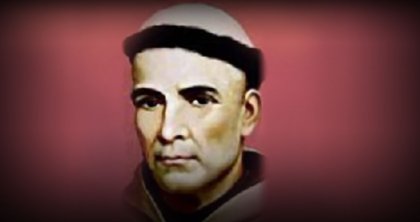
Firmino of the Nativity was born in Amiens (France) on August 31, 1759.
He entered the Order of Discalced Carmelites and was ordained a priest. He supported a bitter struggle for the defence of the Church during the French Revolution. Expelled from the convent at the beginning of this (1790), he continued his intense apostolate in his hometown (1790-93). Forced to leave in 1793, he carried out a very active ministry in the surroundings parishes, devoid of any religious assistance. Someone despicably informed on him and he was arrested in 1794 and sent to his death on April 14 of the same year.
The diocesan process on his martyrdom took place in Amiens in the years 1928-29. The vote on his writings is dated November 27, 1937. The decree of validity was granted on October 11th, 1991.
Procedure Caterina di Cristo
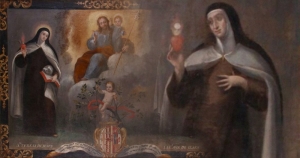
2. To initiate a Cause it is necessary that at least five years pass after the death of the candidate. This is to allow for greater balance and objectivity in the evaluation of the case and to allow the emotions of the moment to decant. There must be a clear conviction among people about his/her sanctity (fama sanctitas) and about the efficacy of his/her intercession with the Lord (fama signorum).
Links - Caterina di Cristo
Documentation [Caterina di Cristo]
PLEASE NOTE
1) In order to be able to consult the Positio please fill in the request form on this page.
2) If your request is accepted, we will then send you the conditions and directions for consulting the document.
[No form id or name provided!]
Caterina di Cristo
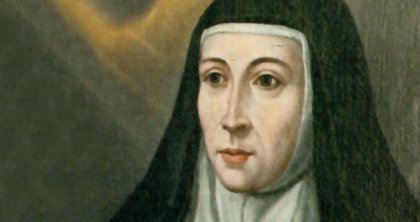
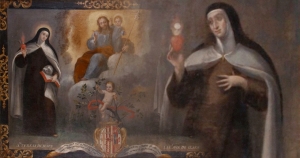
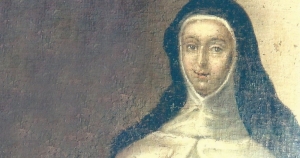
Catalina of Christ was born in Madrigal de las Altas Torres (Spain) on October 28, 1544, to deeply Christian parents: Cristoforo and Giovanna de Bustamante y Sanmartín, of noble descent. Third of four children, she loved to pray from the time she was a child.
Of precocious intelligence, she asked her father and the governess for explanations on Christian doctrine, at the same time she was generous towards the poor, especially towards children. As a young girl, she visited the sick in the hospital and in their homes; inviting those of her own age to do the same for the homeless, she offered her home so that they could spend the night there. Together with her sister she helped the sick with courage and generosity during the plague that struck Madrigal in 1570.
A relative of Teresa of Jesus, when she was left alone after the death of her parents and brothers, she was welcomed in the monastery of Medina del Campo, where she took the habit on October 6, 1571; on 5th of August 1573 she made her profession. Between Catalina and Teresa there was a deep knowledge and mutual support on the path of holiness. When Teresa appointed her prioress of the new monastery of Soria in 1581, speaking of her with the provincial, Fr. Girolamo Gracián, she said: «Catalina of Christ knows how to love God very much and is a very great saint and has a very lofty spirit, and does not need to know anything else in order to govern. She will be as good a prioress as any».
The last known letter of Saint Teresa is addressed precisely to Catherine. At the death of Teresa of Jesus (5 October 1582), Fr. Gracián asked Catalina of Christ to write down her inner experience and designated her to continue the work of St. Teresa of Jesus; it was she who opened the first Carmelite community in Pamplona, on 8th of December 1583 and that of Barcelona (Catalonia), on 14th of June 1588.
Already during her life, the Mother enjoyed a reputation of holiness for her virtues, especially humility and charity. Purified from suffering and esteemed by all, she died in Barcelona on January 3rd, 1594, arousing the regret of those who had known her.
On March 20, 1993, the decree of validity was granted to the Diocesan Inquiry into her «Life, Virtue and Reputation for Holiness».
Procedure Anastasio Alberto Ballestrero (cardinale)
1. The canonical norms concerning the procedure to be followed in the Causes of Saints are stated in the Apostolic Constitution Divinus Perfectionis Magister promulgated by John Paul II on 25 January 1983 (AAS LXXV, 1983, 349-355).
2. To initiate a Cause it is necessary that at least five years pass after the death of the candidate. This is to allow for greater balance and objectivity in the evaluation of the case and to allow the emotions of the moment to decant. There must be a clear conviction among people about his/her sanctity (fama sanctitas) and about the efficacy of his/her intercession with the Lord (fama signorum).
Last News

Venerable Jean-Thierry of the Child Jesus and the …
June 17, 2026

Venerable Maria Eletta di Gesù
June 17, 2026

Venerable Maria Teresa of the Most Holy Trinity (Y…
June 17, 2026

Blessed Anna of Saint Bartholomew
June 10, 2026

Martyrs of Santander
May 27, 2026
