



Documentation [Cunegonda Siwiec]
![Documentation [Cunegonda Siwiec]](/media/k2/items/cache/4ab6f5fd703b5bb734c4bf88679e8b92_Generic.jpg)
PLEASE NOTE
1) In order to be able to consult the Positio please fill in the request form on this page.
2) If your request is accepted, we will then send you the conditions and directions for consulting the document.
Cunegonda Siwiec
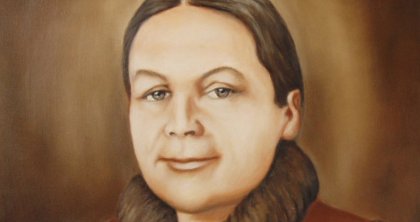
Kunegunda Siwiec was born in Siwcowka, diocese of Krakow, in 1876, the ninth of ten children of the Siwiec family. She was called by all by the diminutive of Kundusia.
She breathed in the serenity of the landscape and her family, whose father, even in old age, went out to the pasture whistling and singing, and in the evening he was enchanted admiring the nuances of the sunset, while sitting in front of the house. Kundusia learned to read and to sign by participating, in the winter months, in a kind of «evening school», in which her teachers were the most educated inhabitants in the village. On the other hand, she grew up determined, strong-willed and deeply religious, with a boyfriend, whom she cared about a lot and with whom she was already making marriage plans.
The turning point of her life came in 1896, while taking part in a popular mission preached by a Redemptorist priest: Kundusia, with her 20 years and marriage in sight, suddenly discovered her vocation: «to live in the world, but only for Christ». She thus reorganized her life around this ideal, giving absolute priority to spiritual things. She began by enrolling in the Apostolate of Prayer, then attended a catechesis course preparing the highland girls for marriage and children for first communion. Finally she joined the Carmelite Third Order. In the village they observed her gradual metamorphosis, from a girl «like every other» to one more and more «of Jesus»: they did not know, but they could guess that behind all this there was a great intimacy with paradise, arising and supported by long hours of «heart to heart» prayer with Jesus.
In 1929 she offered the land that would have been her inheritance to build an "educational centre": a regular school, in short, the one she was never able to attend, run by qualified nuns, who moreover took care of the education of children and adults. Attached to the Centre a chapel was also built and it was only from that year, therefore, that Kundusia had the joy and opportunity of attending daily Mass. The Eucharist gave wings to her spirituality and increased her intimacy with Jesus. It is not known exactly when, but, particularly after communion, she began to have «interior locutions». Kundusia revealed this to her confessor only in 1942, with some embarrassment, admitting that this had been happening for some time. This gradually led her to mature the decision to offer her life in reparation for the sins of the world and to grow in her a complete self-giving, in union with the sacrifice of Jesus on the cross.
To Kundusia began to flow simple and cultured people, priests and religious for advice, spiritual help, and encouragement to good: everyone received from this illiterate woman what they needed. Entering her house they would find her engaged with her brothers in reading mystical works, which she commented on with a depth and competence that amazed even the best of theologians. Her complete union with Jesus reached its climax with the joyful acceptance of suffering: in 1948 she was struck by a bone tumour with widespread metastases, bringing unspeakable suffering hidden behind her usual smiling and playful attitude. Everything was offered in reparation for the sins of the world, all lived in union with the sacrifice of the cross.
Despite excruciating pain, she died peacefully on June 27, 1955.
The Diocesan Inquiry into her "Life, Virtue and Fame for Holiness" was opened on 21st of December 2007 and closed on 28th of October 2011 at the Archdiocese of Krakow. The decree of validity was granted on March 1st, 2013.
Procedure Jean Thierry (Ebogo) di Gesù Bambino e della Passione
1. The canonical norms concerning the procedure to be followed in the Causes of Saints are stated in the Apostolic Constitution Divinus Perfectionis Magister promulgated by John Paul II on 25 January 1983 (AAS LXXV, 1983, 349-355).
2. To initiate a Cause it is necessary that at least five years pass after the death of the candidate. This is to allow for greater balance and objectivity in the evaluation of the case and to allow the emotions of the moment to decant. There must be a clear conviction among people about his/her sanctity (fama sanctitas) and about the efficacy of his/her intercession with the Lord (fama signorum).
Links - Jean Thierry (Ebogo) di Gesù Bambino e della Passione

Documentation [Jean Thierry (Ebogo) di Gesù Bambino e della Passione]
PLEASE NOTE
1) In order to be able to consult the Positio please fill in the request form on this page.
2) If your request is accepted, we will then send you the conditions and directions for consulting the document.
[No form id or name provided!]
Jean Thierry (Ebogo) di Gesù Bambino e della Passione
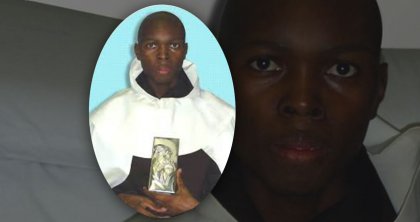
Jean Thierry was born on February 4, 1982 and travelled Cameroon from one end to the other, following his father, who for work reasons had to change residence every two or three years.
An inseparable companion in his unceasing mobility was always the thought of a priestly vocation, which his parents did not hinder and which enlightened spiritual direction helped to strengthen. At the age of 11, when he entered the seminary, the fundamental features of his spiritual nature were already well outlined in him: a decisive character, lively intelligence, basically irritable but ready to apologize, intolerant of every injustice, in love with prayer, all naturally led to meditation.
After middle school he chose scientific studies. Thinking that this was what could better prepare him to help his people in the social field, even in his future as a priest, which continued to be the horizon towards which he was walking. «I want to be a priest and I want to arrive pure to the priesthood», he said, more than ever jealous of his vocation, even if surrounded and courted by many girls, who instead of calling him Jean Thierry renamed him "Jean Cheri" because of his affability, his joy and his irrepressible vitality, also expressed on the volleyball fields, basketball and athletics tracks, where the stubborn and strong-willed boy gave the best of himself, at least as much as in study and in the small jobs by which he tried to help his parents make ends meet with the family budget.
His high school maturity also seemed to shine light to his vocational journey: in September 2001 he entered the novitiate of the Oblates of Mary Immaculate, from which eight months later he was discharged because his vocation «did not present the characteristics of the Oblate charism». It was an authentic cold shower for him and for those who had sponsored his vocation. While telling himself there was no need «to make a drama out of it because, officially, I have not been reprimanded for anything», Jean felt all the weight of this refusal, having to return to his family, searching for a job made more difficult by the irony and mockery of some colleagues. Almost by mere chance, a nun cousin opened the way to Carmel and so he found himself in July 2003 in the monastery of Nkoabang, walking the little way of unconditional trust in God that Thérèse of Lisieux had outlined and on which Jean seemed to fly, as if it were really at Carmel that God had always waited for him and always wanted him.
Here, they were so happy with his spiritual maturity and his continuous progress that, as an aspirant, they promoted him to a postulant after just eleven months. But when he prepared to depart for the novitiate in Burkina Faso, an abscess appeared on his right knee, immediately diagnosed as a malignant tumour. Useless were the cures and chemotherapy sessions; on November 18, 2004 it was necessary to perform an amputation, which Jean faced with an extraordinary courage, stating that «After all the Lord is only asking me for the gift of a leg that is no longer needed». With the intention that none of those who approached him should leave sad, «he preferred to give joy», even when they took him to Italy, first to Legnano, then to Candiolo. He attracted young people like a magnet, everyone admired his strength and patience. On December 8, 2005, with a dispensation from Rome, he made his solemn profession in his hospital bed: he would be content to be even just a "wheelchair priest", dispenser of God's mercy and a man of prayer, but when they told him that his days were now numbered, after just a moment of bewilderment, he concluded that «I will realize my vocation in Paradise, but it will not be a rain of roses like that of Saint Therese. I will bring down a deluge of vocations on Carmel and on the Church».
He died on January 5, 2006, considered a saint.
The diocesan process on his «life, virtue and fame for holiness» was opened at the Archdiocese of Milan on the 15th of February 2013 and ended on the 9th of September 2014. On the 24th of November 2017 the decree of validity was granted.
Procedure Giovanni Antonio Guadagni (cardinale)
1. The canonical norms concerning the procedure to be followed in the Causes of Saints are stated in the Apostolic Constitution Divinus Perfectionis Magister promulgated by John Paul II on 25 January 1983 (AAS LXXV, 1983, 349-355).
2. To initiate a Cause it is necessary that at least five years pass after the death of the candidate. This is to allow for greater balance and objectivity in the evaluation of the case and to allow the emotions of the moment to decant. There must be a clear conviction among people about his/her sanctity (fama sanctitas) and about the efficacy of his/her intercession with the Lord (fama signorum).
Links - Giovanni Antonio Guadagni (cardinale)
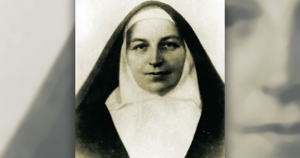
Documentation [Giovanni Antonio Guadagni (cardinale)]
PLEASE NOTE
1) In order to be able to consult the Positio please fill in the request form on this page.
2) If your request is accepted, we will then send you the conditions and directions for consulting the document.
[No form id or name provided!]
Last News

Venerable Jean-Thierry of the Child Jesus and the …
June 17, 2026

Venerable Maria Eletta di Gesù
June 17, 2026

Venerable Maria Teresa of the Most Holy Trinity (Y…
June 17, 2026

Blessed Anna of Saint Bartholomew
June 10, 2026

Martyrs of Santander
May 27, 2026
