



Documentation [Benigno di S. Teresa di Gesù Bambino]
PLEASE NOTE
1) In order to be able to consult the Positio please fill in the request form on this page.
2) If your request is accepted, we will then send you the conditions and directions for consulting the document.
Balbino del Carmelo
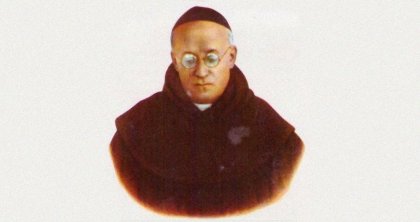
Balbino of Carmel was born on March 7, 1865 in Fresno, a province of Avila (Spain) to Lorenzo Sánchez and Balbina Mayorga. Two days after his birth he was baptized with the names of Ildefonso-Thomas. He received the sacrament of Confirmation in his hometown on November 11, 1876. In due course he zealously made his first communion.
At the age of 16 he entered the novitiate of the Discalced Carmelites in Larrea (Vizcaya) on January 29, 1881. From that day he was called by the religious name of Br. Balbino of Carmel.
On January 3, 1882, he made his simple profession. He soon decided to attend the school of philosophy in Burgos. Once he completed his courses in philosophy, he was assigned to the College of Alba de Tormes (Salamanca) to study dogmatic and moral theology..
On the 22nd of February 1885, he professed his solemn vows.
At the tomb of the Holy Mother, he progressed in virtue and science, preparing with trepidation to receive priestly ordination. This occurred on August 14, 1887. The next day, the feast of the Assumption of Our Lady, he solemnly celebrated his first Mass at the Isabeles Church in Alba de Tormes.
In December 1888 he was sent to Cuba. In the Provincial Chapter of May 1891, he was appointed Prior of that same community until 1894.
He died in Avila on May 12, 1934.
The decree on his heroic virtue was promulgated on September 7, 1989.
Documentation [Balbino del Carmelo]
PLEASE NOTE
1) In order to be able to consult the Positio please fill in the request form on this page.
2) If your request is accepted, we will then send you the conditions and directions for consulting the document.
[No form id or name provided!]
Links - Balbino del Carmelo

Procedure - Balbino del Carmelo
1. The canonical norms concerning the procedure to be followed in the Causes of Saints are stated in the Apostolic Constitution Divinus Perfectionis Magister promulgated by John Paul II on 25 January 1983 (AAS LXXV, 1983, 349-355).
2. To initiate a Cause it is necessary that at least five years pass after the death of the candidate. This is to allow for greater balance and objectivity in the evaluation of the case and to allow the emotions of the moment to decant. There must be a clear conviction among people about his/her sanctity (fama sanctitas) and about the efficacy of his/her intercession with the Lord (fama signorum).
Aureliano del SS. Sacramento
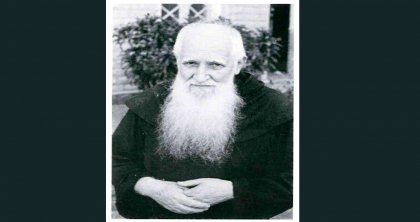
Aureliano of the Most Blessed Sacrament was born on June 27, 1887 in San Miguel de Basauri (Vizcaya – Spain).
At the age of fifteen he entered the novitiate of the Discalced Carmelites in Larrea and studied philosophy and theology in the monasteries of Burgos, Vitoria and Bilbao. At the age of 23 he was ordained a priest in Pamplona and at the age of 26 he embarked for India as an apostolic missionary. He stayed there for the rest of his life without ever returning home.
Over 51 years, Fr. Aureliano devoted himself to the formation of local candidates for the priesthood. He was appointed Rector of the Seminary of Alwaye (1944-1956) where he strongly supported the formation of priestly vocations.
He vigorously promoted perpetual adoration of the Eucharist in India, Sri Lanka and Ceylon.
On January 1st, 1931, he organized in a series of churches adoration of the Blessed Sacrament, both day and night, without interruption throughout the year.
Fr. Aureliano died on the 16th of November, 1963.
The decree on his heroic virtue was promulgated on the 26th of March, 1999.
Documentation [Aureliano del SS. Sacramento]
PLEASE NOTE
1) In order to be able to consult the Positio please fill in the request form on this page.
2) If your request is accepted, we will then send you the conditions and directions for consulting the document.
[No form id or name provided!]
Links - Aureliano del SS. Sacramento
Procedure - Aureliano del SS. Sacramento
1. The canonical norms concerning the procedure to be followed in the Causes of Saints are stated in the Apostolic Constitution Divinus Perfectionis Magister promulgated by John Paul II on 25 January 1983 (AAS LXXV, 1983, 349-355).
2. To initiate a Cause it is necessary that at least five years pass after the death of the candidate. This is to allow for greater balance and objectivity in the evaluation of the case and to allow the emotions of the moment to decant. There must be a clear conviction among people about his/her sanctity (fama sanctitas) and about the efficacy of his/her intercession with the Lord (fama signorum).
Antonio Augusto Intreccialagli (vescovo)
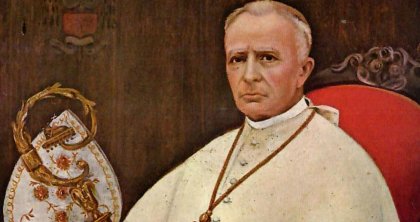
Augusto Intreccialagli was born in Montecompatri (Italy) on February 18th, 1852.
He entered the novitiate of the Roman Province of the Discalced Carmelites in 1868 and was ordained a priest on May 2nd, 1875. His outstanding human and spiritual qualities were immediately noticed by his superiors who over time entrusted him with delicate tasks within the Order.
He was also Consultor of the Congregation of Bishops and Apostolic Visitator of the Salvatorian Friars and Sisters. In 1907 came the unexpected appointment as Bishop of Caltanissetta, which Intreccialagli accepted only by virtue of obedience to the Pope, Pius X. In his diocese, where he was warmly welcomed by the people, he worked for the completion of the Episcopal Seminary, which was inaugurated in 1912, he dedicated himself to the spiritual direction of many lay people and figures of high spiritual stature such as Antonietta Mazzone and Marianna Amico Roxas.
On March 19, 1919, with great suffering, he had to leave his diocese to transfer to Monreale where for some years he had been carrying out the position of Apostolic Administrator, shuttling between Caltanissetta and Monreale. Here he lived the last years of his life and his tireless episcopal ministry was marked by great physical and spiritual suffering.
He died in Monreale the 19th of September, 1924.
The decree on his heroic virtue was promulgated on 22nd of December, 1991.
Last News

Venerable Jean-Thierry of the Child Jesus and the …
June 17, 2026

Venerable Maria Eletta di Gesù
June 17, 2026

Venerable Maria Teresa of the Most Holy Trinity (Y…
June 17, 2026

Blessed Anna of Saint Bartholomew
June 10, 2026

Martyrs of Santander
May 27, 2026
