



Procedure - Anna di Gesù
1. The canonical norms concerning the procedure to be followed in the Causes of Saints are stated in the Apostolic Constitution Divinus Perfectionis Magister promulgated by John Paul II on 25 January 1983 (AAS LXXV, 1983, 349-355).
2. To initiate a Cause it is necessary that at least five years pass after the death of the candidate. This is to allow for greater balance and objectivity in the evaluation of the case and to allow the emotions of the moment to decant. There must be a clear conviction among people about his/her sanctity (fama sanctitas) and about the efficacy of his/her intercession with the Lord (fama signorum).
Links - Anna di Gesù
Documentation [Anna di Gesù]
PLEASE NOTE
1) In order to be able to consult the Positio please fill in the request form on this page.
2) If your request is accepted, we will then send you the conditions and directions for consulting the document.
Zaccaria di S. Teresa
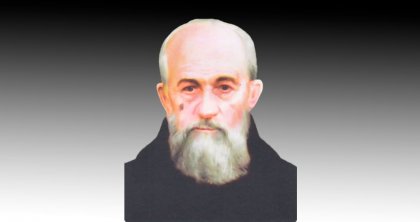
His name was Zacarias Salterain Bizkarra and he was born in Abadiano (Vizcaya, Spain) on November 4, 1887; he did his first studies at the Jesuit college of Durango in Spain; at the age of 15 he entered the Novitiate of the Discalced Carmelites, where on September 12, 1904 he made his profession, taking the name of Zacarias of St. Teresa.
He attended courses in theology and philosophy in the Spanish cities of Bilbao-Begoña, Vitoria and Pamplona, to finish his studies in Rome, where he was ordained a priest on July 14, 1912.
Almost immediately he was sent to the vast missionary field of India and destined for the apostolic seminary of St. Joseph in the city of Puthempally, from there he was then transferred to Alwaye in the Indian state of Kerala, arriving there on November 20, 1912, with the task of teaching philosophy, especially Hindu philosophy, of which he became a talented expert.
In 1913, at the age of 26, he was appointed Prefect of philosophy students; his fast and deserving career among high school students, led him to become at the age of 47, in 1934, spiritual director of the Institute; in 1945 he became vice-rector of the great seminary of Alwaye, which, by now, was attended by more than 700 major clerics of the three Christian rites existing in India, Latin, Malabar and Malankara and of several religious institutes.
Finally in 1955, at the age of 68, he was appointed as Dean of the new distinguished building for philosophers; a position that he held for two years, that is, until his death. His work as a missionary Carmelite took place practically entirely in the teaching and formation of generations of young Indian priests, who despite the distinct forms of Christian worship, typical of the Indian subcontinent to which they belonged, recognized in him the sure guide, the distinguished theologian and philosopher, the spiritual father of their young priesthood.
But Father Zacarias of St. Teresa, did not stand out only for teaching, he was above all an apostolic man of great faith, with a spirit of piety and ardent zeal to achieve the conversion of souls, he was also a valiant director of the seminary.
He was also the author of the "Studies on Hinduism" in 5 volumes, collections which he printed of the lessons of the various subjects he taught. Also in the Seminary, he gave life to the "Sacred Heart Conversion League" Association, dedicated to prayer and penance, and he was a publisher, based in the Seminary, of three periodical publications of his own and of a whole series of pamphlets with popular circulation, concerning apologetics and doctrinal and spiritual formation.
Always requested by all, even by non-Christians, he bestowed without distinction, goodness and help as far as possible. With his evangelical simplicity, generous availability, integration into the Environment and Indian mentality, charity, prayer and poverty, combined with his cultural preparation, he became the figure of the holy missionary, giving moreover honour to the habit of the Discalced Carmelites to which he belonged.
He was a theologian at the First Plenary Council of India, Apostolic Commissioner of the Discalced Carmelite Tertiaries of the Latin rite, effective collaborator of several periodical publications.
In 1957 when he was 70 years old, he was transferred to Vellore, where he was operated on for abdominal cancer, which in recent times had violently shaken his life and his activity; but it was a malign evil and shortly afterwards without complaining, praying and entrusting himself completely to God, he died on May 23, 1957.
His funeral was a solemn one, with the participation of eight bishops, 300 priests and 400 seminarians; he was buried in the cemetery of the seminary; the tomb of Father Zacarias has since become a place of pilgrimage.
The decree on his heroic virtue was promulgated on January 27, 2014.
Documentation [Zaccaria di S. Teresa]
PLEASE NOTE
1) In order to be able to consult the Positio please fill in the request form on this page.
2) If your request is accepted, we will then send you the conditions and directions for consulting the document.
[No form id or name provided!]
Links - Zaccaria di S. Teresa

Procedure - Zaccaria di S. Teresa
1. The canonical norms concerning the procedure to be followed in the Causes of Saints are stated in the Apostolic Constitution Divinus Perfectionis Magister promulgated by John Paul II on 25 January 1983 (AAS LXXV, 1983, 349-355).
2. To initiate a Cause it is necessary that at least five years pass after the death of the candidate. This is to allow for greater balance and objectivity in the evaluation of the case and to allow the emotions of the moment to decant. There must be a clear conviction among people about his/her sanctity (fama sanctitas) and about the efficacy of his/her intercession with the Lord (fama signorum).
Teresa di Sant’Agostino
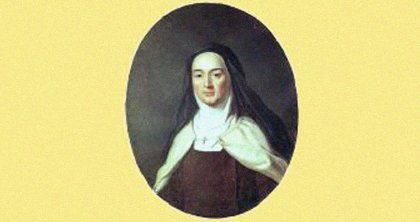
Born in Versailles (France) on the 15th of July 1737, she was the daughter of King Louis XV and Maria Leszczynska.
In April 1770, with the consent of her father, the King of France, she entered the Carmelite monastery of Saint-Denis, and was given the name Marie-Thérèse de Saint-Augustin or Thérèse de Saint-Augustin. Her action aroused the admiration of the whole of France. Pope Clement XIV wrote her a letter to congratulate her on her action.
In the monastery, she ensured that she had no privileges, despite her royal rank. She also learned to pray on her knees, which was particularly difficult and painful for her because of a leg disability caused by a childhood accident.
After years of sacrifices, which she happily accepted, she was elected superior of the convent. She then tried to open France to the Austrian Carmelites persecuted by Emperor Joseph II, and used her influence on his nephew, the French King Louis XVI. To eliminate this influence, a plot to poison her was conceived. In November 1787, she began to suffer severe stomach pains, which became increasingly worse.
She died on 23 December 1787 after a life of asceticism and penance.
The decree on the heroicity of the virtues was promulgated on 18 December 1997.
Documentation [Teresa di Sant’Agostino]
PLEASE NOTE
1) In order to be able to consult the Positio please fill in the request form on this page.
2) If your request is accepted, we will then send you the conditions and directions for consulting the document.
[No form id or name provided!]
Links - Teresa di Sant’Agostino
Last News

Venerable Jean-Thierry of the Child Jesus and the …
June 17, 2026

Venerable Maria Eletta di Gesù
June 17, 2026

Venerable Maria Teresa of the Most Holy Trinity (Y…
June 17, 2026

Blessed Anna of Saint Bartholomew
June 10, 2026

Martyrs of Santander
May 27, 2026
