



Procedure - Eufrasio di Gesù Bambino
1. The canonical norms concerning the procedure to be followed in the Causes of Saints are stated in the Apostolic Constitution Divinus Perfectionis Magister promulgated by John Paul II on 25 January 1983 (AAS LXXV, 1983, 349-355).
2. To initiate a Cause it is necessary that at least five years pass after the death of the candidate. This is to allow for greater balance and objectivity in the evaluation of the case and to allow the emotions of the moment to decant. There must be a clear conviction among people about his/her sanctity (fama sanctitas) and about the efficacy of his/her intercession with the Lord (fama signorum).
Martiri di Tarragona (Elipio di Santa Teresa e 146 Compagni)
In July 1936 in Spain, after the political elections and the triumph of the left, there were criminal actions not only against political exponents but also against the religious. Contempt for religion and anticlerical attacks manifested themselves in the burning of churches and monasteries.
On July 21, 1936 the revolutionaries arrived at the Church of the Carmelite Fathers and with an iron bar opened the door and entered the Church with gasoline cans; a quarter of an hour later the Church turned into a fireball. The church of the Carmelites reduced to ashes, the monastery was transformed into a prison. The Carmelite Fathers, to escape the persecution of the revolutionaries, took refuge with friends and, discovered by the militiamen, professed with a serene spirit that they were religious, which is why they were killed. The killing of the three Discalced Carmelite fathers, the four Discalced Carmelite lay Brothers and the four «Carmelite Tertiary Brothers of Education» (a congregation founded by Bl. Francesco Palau, OCD) took place in the period between 25 July 1936 and 11 November 1936. Their names are:
Elipio of Saint Teresa (Felipe Arce Fernández), Professed Priest OCD, (1878-1836)
Pere of Saint Elijah (Pedro de Eriz Eguiluz), Professed Priest OCD, (1867-1836)
Damià of the Most Holy Trinity (Damián Rodríguez Pablos) Professed Religious OCD, (1896-1836)
Josep Cecili of Jesus Mary (Josep Alberich Lluch), Professed Religious OCD, (1866-1836)
Vicent of the Cross (Vicent Gallen Ibáñez), Professed Priest OCD, (1908-1836)
Àngel of Saint Joseph (Joan Fort Rius), Professed Religious OCD, (1896-1836)
Carles of Jesus Mary (Carles Barrufet Tost), Professed Religious OCD, (1888-1836)
Juli Alameda Camarero, Carmelite Tertiary Brother of Education, (1911-1836)
Isidre Tarsà Giribets, Carmelite Tertiary Brother of Education, (1866-1836)
Lluís Domingo Oliva, Carmelite Tertiary Brother of Education, (1892-1836)
Bonaventura Toldrà Rodon, Carmelite Tertiary Brother of Education, (1896-1836)
They were beatified on October 13, 2013, in the Archdiocese of Tarragona (Spain), along with 522 other martyrs who offered their lives for the faith during the Spanish Civil War.
Documentation [Martiri di Tarragona (Elipio di Santa Teresa e 146 Compagni)]
PLEASE NOTE
1) In order to be able to consult the Positio please fill in the request form on this page.
2) If your request is accepted, we will then send you the conditions and directions for consulting the document.
Links - Martiri di Tarragona (Elipio di Santa Teresa e 146 Compagni)

Procedure - Martiri di Tarragona (Elipio di Santa Teresa e 146 Compagni)
1. The canonical norms concerning the procedure to be followed in the Causes of Saints are stated in the Apostolic Constitution Divinus Perfectionis Magister promulgated by John Paul II on 25 January 1983 (AAS LXXV, 1983, 349-355).
2. To initiate a Cause it is necessary that at least five years pass after the death of the candidate. This is to allow for greater balance and objectivity in the evaluation of the case and to allow the emotions of the moment to decant. There must be a clear conviction among people about his/her sanctity (fama sanctitas) and about the efficacy of his/her intercession with the Lord (fama signorum).
Elia di S. Clemente
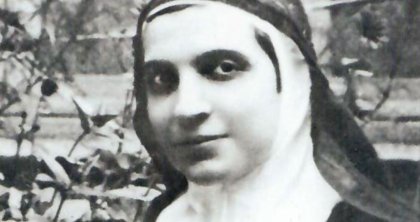
Theodora Fracasso was born in Bari on 17th of January 1901, the third child of Giuseppe Fracasso and Pasqua Cianci and was baptized four days later by her uncle Fr Carlo Fracasso with the name of Theodora.
In 1914 Father Pietro Fiorillo, O.P., Theodora's spiritual director, introduced her into the Dominican Third Order; she entered as a novice on April 20, 1914 with the name of Agnes and made her profession on May 14, 1915, with a special dispensation, given her young age.
In 1917, the Jesuit priest Sergio Di Gioia, her new confessor, decided to direct her to the Carmel of St. Joseph in Bari, where she entered the community on April 8, 1920 and took the habit on November 24 of the same year, taking the name of Sister Elisha of St. Clement. She made her first simple vows on December 4, 1921, followed by her solemn profession on February 11, 1925.
Sister Elisha died at 12:00 on December 25, 1927 due to meningitis.
The beatification ceremony took place on March 18, 2006.
Documentation [Elia di S. Clemente]
PLEASE NOTE
1) In order to be able to consult the Positio please fill in the request form on this page.
2) If your request is accepted, we will then send you the conditions and directions for consulting the document.
[No form id or name provided!]
Links - Elia di S. Clemente
Procedure - Elia di S. Clemente
1. The canonical norms concerning the procedure to be followed in the Causes of Saints are stated in the Apostolic Constitution Divinus Perfectionis Magister promulgated by John Paul II on 25 January 1983 (AAS LXXV, 1983, 349-355).
2. To initiate a Cause it is necessary that at least five years pass after the death of the candidate. This is to allow for greater balance and objectivity in the evaluation of the case and to allow the emotions of the moment to decant. There must be a clear conviction among people about his/her sanctity (fama sanctitas) and about the efficacy of his/her intercession with the Lord (fama signorum).
Dionisio della Natività
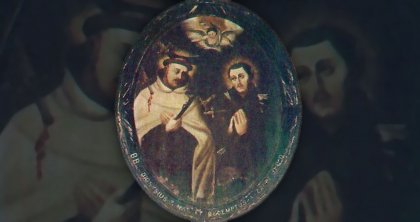
Peter Berthelot was born in Honfleur (Calvados, France) on December 12, 1600 and at a very young age he gave himself to navigation, traveling to Spain, England, America. In 1619 he went to India, where, as a cosmographer and first pilot of the kings of France and Portugal, he distinguished himself by his worth and ingenuity, as evidenced by his Maritime Tables, outlined with great skill and preserved in the British Museum (Ms. Sloan 197).
In 1635, finding himself in Goa, on the advice of his spiritual director, Fr. Philip of the Most Holy Trinity, he entered the Discalced Carmelites, where he was professed on December 25, 1636 and given the name of Denis of the Nativity and received the priesthood on August 24, 1638. Both in the novitiate and after profession, according to the testimony of Fr. Philip, he was an example of virtue to all the religious. During prayer, he was not infrequently raised to divine contemplation, appearing to be surrounded by heavenly splendour. In 1638, the Viceroy Pietro da Silva sent to the Sultan of Achén (Sumatra), the ambassador Francesco de Souza de Castro who wanted Denis with him as a spiritual guide and as an expert on the sea and the Malay language. Denis took as his companion Thomas Rodriguez, who, born about 1598 in Portugal, had entered the same Order as a lay brother, with the name of Redemptus of the Cross.
The two left Goa with the legation on September 25, 1638, and, after fortunate navigation, on October 25 they arrived at Achén, where, greeted with signs of simulated joy, they were soon taken prisoner. As religious, Denis and Redemptus were tormented and tempted more than the others to leave their Catholic faith and convert to that of the Muslims. In prison Denis deprived himself of necessities out of charity towards others, whom he supported with words, help and example. After the death sentence, Redemptus died among the first, while Denis suffered martyrdom last, at his desire, in order to be able to comfort the others: he was killed by a sword, which split his head in two, on November 29, 1638.
The beatification ceremony was held on June 10, 1900.
Last News

Venerable Jean-Thierry of the Child Jesus and the …
June 17, 2026

Venerable Maria Eletta di Gesù
June 17, 2026

Venerable Maria Teresa of the Most Holy Trinity (Y…
June 17, 2026

Blessed Anna of Saint Bartholomew
June 10, 2026

Martyrs of Santander
May 27, 2026
