



Procedure - Enrico de Ossó y Cervelló
1. The canonical norms concerning the procedure to be followed in the Causes of Saints are stated in the Apostolic Constitution Divinus Perfectionis Magister promulgated by John Paul II on 25 January 1983 (AAS LXXV, 1983, 349-355).
2. To initiate a Cause it is necessary that at least five years pass after the death of the candidate. This is to allow for greater balance and objectivity in the evaluation of the case and to allow the emotions of the moment to decant. There must be a clear conviction among people about his/her sanctity (fama sanctitas) and about the efficacy of his/her intercession with the Lord (fama signorum).
Documentation [Enrico de Ossó y Cervelló]
PLEASE NOTE
1) In order to be able to consult the Positio please fill in the request form on this page.
2) If your request is accepted, we will then send you the conditions and directions for consulting the document.
Links - Enrico de Ossó y Cervelló

Juan de Palafox y Mendoza (Vescovo)
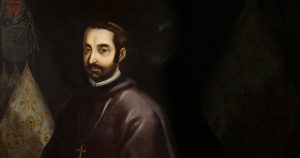
Juan de Palfox y Mendoza was born in Fitero (Navarre), Spain, on June 24, 1600, and was baptized on June 29, the feast of St. Peter, to whom he was always to have a special devotion.
In 1610 for his education he was entrusted to the care of the Bishop of Tarazona Don Diego de Yepes, and for five years he attended the College of the Society of Jesus in the city of Tarazona, from where he then passed to the Universities of Huesca, Alcalá and Salamanca. After finishing his studies, in 1621 he returned to Ariza, where he ruled the states of his father the Marquis and had the opportunity to read and deepen in many other authors and texts.
Through the interest of the Count-Duke of Olivares he was offered posts and honours in the Madrid of Philip IV, first in the Council of War in 1626, and from 1629, in that of the Indies, distinguishing himself in a noteworthy manner for his prudence and intelligence in his interventions in both.
In 1629 a decisive event took place in his life, in that after a year of intense preparation, in prayer and penance, he received priestly ordination on 15th of April. Shortly after his ordination, the King gave him the mission of accompanying, as chaplain and almoner, his sister Maria, who had become the wife of the King of Hungary, the future Emperor. It was during this journey of over a year to Europe that his mystical encounter with the Humanity of Christ took place through a Crucifix, with its arms and legs broken by heretics. He felt that the Crucifix asked him not to leave it abandoned there; he took it with him, had it restored, and it was his traveling companion for the rest of his life..
In 1639, after appropriate consultations, Don Juan de Palafox was appointed to the episcopal see of Puebla de los Ángeles, with the addition of other important positions of government in New Spain, such as that of Visitator. He left for the Indies in 1640 and remained there until 1649, carrying out important assignments in the service of the monarchy and the Church, not without sorrows and misunderstandings on the part of those who refused to submit to the directives of ecclesiastical discipline and to the order established by the laws of the monarchy. In those lands Blessed Palafox is still remembered as the great reformer, the tireless pastor of souls, the protector of the dispossessed and the natives, and also as the builder of the cathedral and numerous other buildings, and the founder of the Palafox Library, consisting of several thousand volumes that he donated from his private library brought from Spain..
As a prelate, he distinguished himself for his pastoral and educational attention, creating the Colleges of St. Peter and St. Paul for the formation of seminarians, erecting in them and endowing chairs of indigenous languages, without the knowledge of which he would not ordain priests. The construction of the cathedral, parish churches and other foundations were always at the centre of his attention, as well as the instruction of the faithful people in the doctrine of the faith, through the catechesis that he himself imparted in his visits.
As a good canonist and zealous pastor, he was particularly concerned to apply strictly the norms promulgated by the Council of Trent, concerning ecclesiastical discipline, Eucharistic worship, and that of Mary and of the saints, the dignity of the liturgy and song, and, above all, those concerning one of his most constant concerns, the formation of the clergy..
Bishop Palafox had to return to Spain, by order of the king, following the problems that arose around his interventions as a reformer, but he continued governing the diocese, by means of his vicars and pastoral letters until 1654, in which year he was transferred to the see of Osma, where he continued exercising his pastoral zeal until his holy death, which took place in the episcopal palace of that city on October 1st, 1659.
The beatification ceremony took place on June the 5th, 2011.
Procedure - Juan de Palafox y Mendoza (Vescovo)
1. The canonical norms concerning the procedure to be followed in the Causes of Saints are stated in the Apostolic Constitution Divinus Perfectionis Magister promulgated by John Paul II on 25 January 1983 (AAS LXXV, 1983, 349-355).
2. To initiate a Cause it is necessary that at least five years pass after the death of the candidate. This is to allow for greater balance and objectivity in the evaluation of the case and to allow the emotions of the moment to decant. There must be a clear conviction among people about his/her sanctity (fama sanctitas) and about the efficacy of his/her intercession with the Lord (fama signorum).
Documentation [Juan de Palafox y Mendoza (Vescovo)]
PLEASE NOTE
1) In order to be able to consult the Positio please fill in the request form on this page.
2) If your request is accepted, we will then send you the conditions and directions for consulting the document.
[No form id or name provided!]
Links - Juan de Palafox y Mendoza (Vescovo)
Francesco di Gesù Maria Giuseppe (Palau)
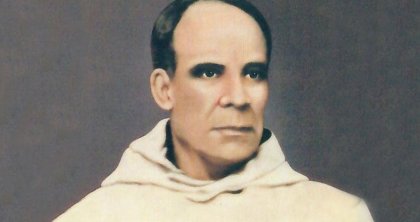
Francis Palau was born on 29th of December 1811 in Aytona (Spain).
In 1828, he entered the seminary of Lèrida. After completing the three years of philosophical studies and finishing the first course of theology, in 1832 he joined the Order of Discalced Carmelites where, in the following year, he made his vows. Forced by political circumstances to live outside the cloister, he was able to receive priestly ordination in Barbastro in 1836.
After a long period of stay in France (1840 - 1851), he returned to Spain and devoted himself to the ministry of preaching and popular missions, especially in Barcelona and the Balearic Islands. It was there that in the years 1860 - 1861 he took care of the organization of some women's groups giving rise to what are now called the Teresian Carmelite Missionary Sisters and the Carmelite Missionary Sisters. He also founded a family of Brothers of Charity, now extinct.
He died in Tarragona on 20th of March 1872.
The beatification ceremony took place on April 24, 1988.
Documentation [Francesco di Gesù Maria Giuseppe (Palau)]
PLEASE NOTE
1) In order to be able to consult the Positio please fill in the request form on this page.
2) If your request is accepted, we will then send you the conditions and directions for consulting the document.
[No form id or name provided!]
Links - Francesco di Gesù Maria Giuseppe (Palau)
Last News

Venerable Jean-Thierry of the Child Jesus and the …
June 17, 2026

Venerable Maria Eletta di Gesù
June 17, 2026

Venerable Maria Teresa of the Most Holy Trinity (Y…
June 17, 2026

Blessed Anna of Saint Bartholomew
June 10, 2026

Martyrs of Santander
May 27, 2026
