



Documentation [Elisabetta della Beata Vergine Maria]
PLEASE NOTE
1) In order to be able to consult the Positio please fill in the request form on this page.
2) If your request is accepted, we will then send you the conditions and directions for consulting the document.
Links - Elisabetta della Beata Vergine Maria

Procedure - Elisabetta della Beata Vergine Maria
1. The canonical norms concerning the procedure to be followed in the Causes of Saints are stated in the Apostolic Constitution Divinus Perfectionis Magister promulgated by John Paul II on 25 January 1983 (AAS LXXV, 1983, 349-355).
2. To initiate a Cause it is necessary that at least five years pass after the death of the candidate. This is to allow for greater balance and objectivity in the evaluation of the case and to allow the emotions of the moment to decant. There must be a clear conviction among people about his/her sanctity (fama sanctitas) and about the efficacy of his/her intercession with the Lord (fama signorum).
Teresa di S. Rosa da Lima
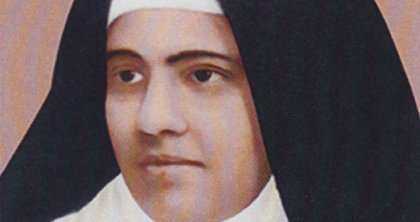
Teresa of St. Rose of Lima was born on 29th of January 1858 in George Town, Madras, India, to Peter D'Lima and Mary D'Lima. She received the name Mary Grace on baptism in St. Mary's Co-Cathedral, two days after her birth. Her mother died when she was little, so her father took care of her education.
She attended the school of the Presentation Sisters, where she distinguished herself for intelligence, musical talent, modesty, earning the esteem of the teachers. Her first contact with Carmel came in 1879, when she assumed the position of principal of the parish school, founded in Alleppey by the Carmelite priest Fr. Alphonsus, whose zeal aroused in Grace the desire to embrace religious life in the Carmelite Order, which happened in 1883, when she received the habit of a Carmelite tertiary from the hands of Fr. Candidus taking the name of Sr. Teresa of St. Rose of Lima.
When her father died in 1884, she took her two younger sisters under her care. On May 25 of the following year she made her solemn profession. In addition to the task of principal, she also took on her shoulders the care of the convent and the responsibility of hospitality.
When, in 1887, she suddenly had to leave for Ernakulan, Kerala, she recognized a call from the Lord. A period of great activity began: She founded the Third Order Sisters of Our Lady of Mt Carmel, known today as the Institute of the Carmelite Sisters of St. Teresa (CSST) on 24th of April, and also founded St. Teresa's English Medium School for Girls on 9th of May and a convent on August 16; in 1889 she opened an orphanage, in 1892 an infirmary for sick orphans and a school for children; in 1893 an industrial school with a small rope production unit; in 1884 a home for the elderly. Her many social activities, undertaken in conditions of extreme material poverty to give a practical follow-up to the invocation «Thy Kingdom come», were aimed at forming and educating the least to restore to them the dignity of children of God which had been trampled upon. All of this earned her the esteem of the authorities and various awards. To carry out the apostolate in the best possible way, her great concern was to form the young sisters adequately, both from a practical and a spiritual point of view.
In 1897 she and her sisters did their utmost to support the program with which the government of Cochin, which had often previously hindered her, tried to cope with the famine. Evangelization always remained the soul of her various activities, as also shown by the initiative of 1898 to organize for the first time a Eucharistic celebration in the local prison. In 1900 Sr. Teresa opened a shelter for single mothers; in 1901 she made a trip to Europe and visited Lourdes.
The following year, on September 13, 1902, during her second trip to Europe, she died tragically in a train accident.
The Diocesan Inquiry into her «life, virtue and reputation of holiness» was opened on 22nd of August 2015 in the Bangalore Diocese. On 9th of December 2020, the decree of validity was granted.
Documentation [Teresa di S. Rosa da Lima]
PLEASE NOTE
1) In order to be able to consult the Positio please fill in the request form on this page.
2) If your request is accepted, we will then send you the conditions and directions for consulting the document.
[No form id or name provided!]
Links - Teresa di S. Rosa da Lima
Procedure - Teresa di S. Rosa da Lima
1. The canonical norms concerning the procedure to be followed in the Causes of Saints are stated in the Apostolic Constitution Divinus Perfectionis Magister promulgated by John Paul II on 25 January 1983 (AAS LXXV, 1983, 349-355).
2. To initiate a Cause it is necessary that at least five years pass after the death of the candidate. This is to allow for greater balance and objectivity in the evaluation of the case and to allow the emotions of the moment to decant. There must be a clear conviction among people about his/her sanctity (fama sanctitas) and about the efficacy of his/her intercession with the Lord (fama signorum).
Emile Biayenda
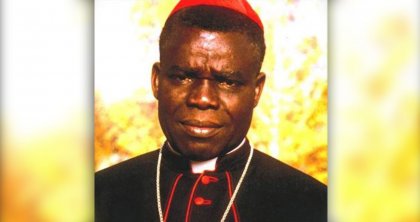
Emile Biayenda was born in Mpangala, Uganda, in 1927.
He was ordained a priest in 1958 in Brazzaville and immediately appointed parish priest. He was imprisoned for a few months because of his participation in the Legion of Mary. He became titular bishop of Garba in 1970 and in 1971 was appointed archbishop of Brazzaville, a position he held until his death. Pope Paul VI created him Cardinal Priest of San Marco in Agro Laurentino in the consistory of 5th of March 1973.
He died assassinated on the night between 22nd and 23rd of March 1977 at the age of 50.
The Diocesan Inquiry on his "life, martyrdom and fame for martyrdom" closed on June 14, 2003. On 29th of May 2015 the decree of validity was granted.
Documentation [Emile Biayenda]
PLEASE NOTE
1) In order to be able to consult the Positio please fill in the request form on this page.
2) If your request is accepted, we will then send you the conditions and directions for consulting the document.
[No form id or name provided!]
Last News

Venerable Jean-Thierry of the Child Jesus and the …
June 17, 2026

Venerable Maria Eletta di Gesù
June 17, 2026

Venerable Maria Teresa of the Most Holy Trinity (Y…
June 17, 2026

Blessed Anna of Saint Bartholomew
June 10, 2026

Martyrs of Santander
May 27, 2026
