



Procedure - Teresa di Gesù Bambino di Praga
1. The canonical norms concerning the procedure to be followed in the Causes of Saints are stated in the Apostolic Constitution Divinus Perfectionis Magister promulgated by John Paul II on 25 January 1983 (AAS LXXV, 1983, 349-355).
2. To initiate a Cause it is necessary that at least five years pass after the death of the candidate. This is to allow for greater balance and objectivity in the evaluation of the case and to allow the emotions of the moment to decant. There must be a clear conviction among people about his/her sanctity (fama sanctitas) and about the efficacy of his/her intercession with the Lord (fama signorum).
Maria Luisa Giuseppa del SS. Sacramento (Navarro)
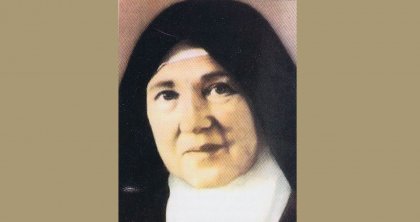
Maria Luisa de la Peña Navarro was born on June 21, 1866 in Atotonilco El Alto (Jalisco), Mexico, into a family of wealthy landowners, of good manners and very charitable.
At the age of 15, in an arranged marriage according to the customs at that time, she married doctor Pascual Rojas, a very charitable and generous man. One of the main works carried out by Rojas, along with other families, was the construction of the Sacred Heart Hospital, the first in Atotonilco, which was inaugurated in 1892. When she was widowed in 1896, a new path opened up for Maria Luisa in life. She devoted herself much to prayer and to the service of the sick.
After a brief experience in the Discalced Carmelites of Guadalajara, on 24th of December 1904, she founded in Atotonilco the Congregation of the Carmelites of the Sacred Heart, taking the name of María Luisa Josefa of the Blessed Sacrament. Mother Luisita, as she was affectionately called by all people, was distinguished by a prayerful and contemplative attitude that led her to discover God in everything and to announce with admiration and gratitude the wonders he had done in her and through her. Such was her detachment and poverty, trust and abandonment into God's hands; her constant search for the Father's will and loving obedience to his plan.
She died a holy death in Guadalajara, Mexico, on February 11, 1937.
The decree on her heroic virtues was promulgated on July 1st, 2000.
Documentation [Maria Luisa Giuseppa del SS. Sacramento (Navarro)]
PLEASE NOTE
1) In order to be able to consult the Positio please fill in the request form on this page.
2) If your request is accepted, we will then send you the conditions and directions for consulting the document.
Links - Maria Luisa Giuseppa del SS. Sacramento (Navarro)

Procedure - Maria Luisa Giuseppa del SS. Sacramento (Navarro)
1. The canonical norms concerning the procedure to be followed in the Causes of Saints are stated in the Apostolic Constitution Divinus Perfectionis Magister promulgated by John Paul II on 25 January 1983 (AAS LXXV, 1983, 349-355).
2. To initiate a Cause it is necessary that at least five years pass after the death of the candidate. This is to allow for greater balance and objectivity in the evaluation of the case and to allow the emotions of the moment to decant. There must be a clear conviction among people about his/her sanctity (fama sanctitas) and about the efficacy of his/her intercession with the Lord (fama signorum).
Anselmo di Sant'Andrea Corsini
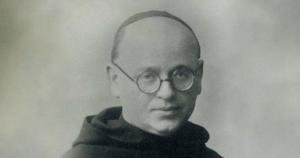
Maciej was born on 24 February 1884 in Marszowice, a parish of Niegowić, in the archdiocese of Kraków (Poland) into a deeply religious and numerous family, the son of Antonio and Salomea Kowalska. In the years 1891-1894 he attended the folk school in Niegowić and during this time he received his First Communion. From 1895 he attended the local high school in Wadowice and was a pupil of the Carmelite boarding school, where he met St. Rafał Kalinowski, renewer of Carmel in Poland, whose personality and holiness exerted a great influence on Maciej's later life.
In 1901 in Czerna, he received the Carmelite habit, becoming Anselm of St Andrew Corsini, and in 1902 he made his religious profession. In the novitiate, enthusiastic about the discovery that he was a «son of Mary», he dedicated himself to her. When he decided, «I want and must be holy,» he remained faithful to this ideal until the end of his life. He studied theology in Rome, where he was ordained a priest on 25th of July 1907. From 1909 to 1918 he taught theology in Kraków and Vienna, and was also tutor to clerics. He was also known for his extensive pastoral activity as a spiritual father, director of spiritual exercises and preacher. In Kraków in 1914 he founded and directed the Confraternity of the Child Jesus of Prague. In the years 1918-1920 he was prior in Wadowice where he founded a minor seminary. In 1920 he was appointed by the General Definitory as the first Provincial of the resurrected Polish Province of the Discalced Carmelites. He tried to recover the monasteries that had been closed and with care he took care of the deep spiritual life of the Carmelite communities.
In 1921, with the collaboration of the Venerable Servant of God, Teresa of St. Joseph (Janina Kierocińska, 1885-1946), he founded the Congregation of the Carmelite Sisters of the Child Jesus to which he transmitted the charism of Divine childhood according to the «little way» of Saint Therese of the Child Jesus. Since 1935 the Congregation has been aggregated to the Order.
From 1925 he stayed in Rome, where he was entrusted with the task of organizing the International College of the Order, in the years 1926-45 he was its first rector, from 1935 also the dean of the Theological Faculty. In the years 1931-1947 he also served as a general councillor; he was entrusted with the task of carrying out visitations in various provinces of the Order. By appointment of Pope Pius XI he became Apostolic Visitator of ecclesiastical seminaries in Poland, of national colleges in Rome. In 1940 Pope Pius XII appointed him consultor to the Congregation for Catholic Seminaries and Universities.
On his return to Poland in 1947, he served as Father Provincial three more times. He always bore witness to a devout priestly and Carmelite life, he took care to keep up the level of spiritual life of the brothers and sisters in Carmel; he was the spiritual father of many consecrated and lay people, whom he led to holiness. He distinguished himself for his fervent charity to his neighbour, for commitment, serenity of mind, prudence, humility and simplicity. With paternal charity he opened himself to the needs of others. He also took care of the formation of the Congregation he founded, elaborated its Constitutions and made a bequest to them of a large number of his spiritual writings.
The last 10 years of his life were spent in the monastery of the Discalced Carmelites in Łódź. Despite weak health and spiritual experiences, he took part in the acts of community life until the end, he abandoned himself to the apostolate of prayer and suffering. His whole life was an example of patience and fidelity to the Carmelite vocation. The secret of his spiritual life was expressed in the words: «All my life I have exercised myself in the practice of the charity of the Child Jesus.»
He died with a reputation for holiness on October 15, 1969. His earthly remains rest in the vestibule of the church of the Discalced Carmelites in Łódź. The process of beatification in the Archdiocese of Łódź began on February 2, 2002, and took place in the years 2002-2008. The acts of the trial were transmitted to the Congregation for the Causes of Saints in Rome.
Procedure - Anselmo di Sant'Andrea Corsini
1. The canonical norms concerning the procedure to be followed in the Causes of Saints are stated in the Apostolic Constitution Divinus Perfectionis Magister promulgated by John Paul II on 25 January 1983 (AAS LXXV, 1983, 349-355).
2. To initiate a Cause it is necessary that at least five years pass after the death of the candidate. This is to allow for greater balance and objectivity in the evaluation of the case and to allow the emotions of the moment to decant. There must be a clear conviction among people about his/her sanctity (fama sanctitas) and about the efficacy of his/her intercession with the Lord (fama signorum).
Documentation [Anselmo di Sant'Andrea Corsini]
PLEASE NOTE
1) In order to be able to consult the Positio please fill in the request form on this page.
2) If your request is accepted, we will then send you the conditions and directions for consulting the document.
[No form id or name provided!]
Links - Anselmo di Sant'Andrea Corsini
Isabella Morfini

Bina (as every one called her) was the eldest of nine sisters and brothers. As both their mother and grandmother were ill, Bina acted as mother to all the family.
Very early on she joined the Association of Catholic Action (AC). For 27 years she served as Diocesan Director of the children’s section of AC, while at the same time holding the office of President of GF. In 1913, Bina founded a local branch of the Carmelite Third Order and led it as Prioress until the time of her death. She was a prominent member of the Oratory of the Sacred Heart, (as was Aldo Moro among many others), and this Association fostered many priestly and religious vocations. In 1928, she founded Unitalsi in Puglia and was also the Regional Delegate for Pontifical Missionary Works.
During her 50 years’ activity as a catechist, Bina “supported the work of the priests in an extraordinary way and imparted Eucharistic and biblical knowledge to her pupils. As she was culturally self-taught, it was only an inspired person that could have achieved this”.
The diocesan tribunal’s investigation of “the life, virtues and apparent sanctity” of Bina concluded on 9 December 2006.
Last News

Venerable Jean-Thierry of the Child Jesus and the …
June 17, 2026

Venerable Maria Eletta di Gesù
June 17, 2026

Venerable Maria Teresa of the Most Holy Trinity (Y…
June 17, 2026

Blessed Anna of Saint Bartholomew
June 10, 2026

Martyrs of Santander
May 27, 2026
