



Procedure - Teresa di Gesù
1. The canonical norms concerning the procedure to be followed in the Causes of Saints are stated in the Apostolic Constitution Divinus Perfectionis Magister promulgated by John Paul II on 25 January 1983 (AAS LXXV, 1983, 349-355).
2. To initiate a Cause it is necessary that at least five years pass after the death of the candidate. This is to allow for greater balance and objectivity in the evaluation of the case and to allow the emotions of the moment to decant. There must be a clear conviction among people about his/her sanctity (fama sanctitas) and about the efficacy of his/her intercession with the Lord (fama signorum).
Teresa di Gesù Bambino
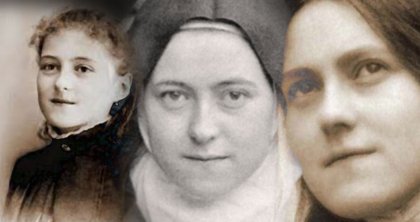
France in the nineteenth century was the first country in Europe in which the conviction began to spread that we could do without God, that we could live as if he did not exist. It was precisely in that country beyond the Alps, however, that some saints, such as Thérèse of Lisieux, recalled that the meaning of life is precisely that of knowing and loving God.
Teresa was born in 1873 in a deeply believing environment. In 2015, her parents were also declared saints. She received, therefore, a profoundly religious education that soon led her to choose the religious life in the Carmel of Lisieux. Here she progressively entrusted herself to God. At the suggestion of the superior, she kept a diary in which she noted the stages of her interior life.
She wrote in 1895: «On 9 June, the feast of the Most Holy Trinity, I received the grace to understand more than ever how much Jesus desires to be loved». Thérèse wanted to respond to God's love with all her strength and youthful enthusiasm.
Little did she know, however, that love would lead her through the path of deprivation and darkness. The following year, 1896, the first signs of tuberculosis appeared, which led to her death. Even more painful was the experience of Godlessness. Accustomed to living in his presence, Therese found herself shrouded in darkness, in which it was impossible for her to see any supernatural sign. There was, however, one last stage accomplished by the saint. She learnt that to her, a little one, was entrusted knowledge of the little way, the way of abandonment to the will of God.
Life, then, became a carefree game for Therese because, even in moments of abandonment, God watches over and is ready to take into his arms those who entrust themselves to him.
The beatification ceremony was held on April 29, 1923. The solemn canonization ceremony on May 17, 1925. She was declared a Doctor of the Church on October 19, 1997.
 Video esumazione e traslazione dei resti mortali di Santa Teresina
Links - Teresa di Gesù Bambino
Documentation [Teresa di Gesù Bambino]
PLEASE NOTE
1) In order to be able to consult the Positio please fill in the request form on this page.
2) If your request is accepted, we will then send you the conditions and directions for consulting the document.
Procedure - Teresa di Gesù Bambino
1. The canonical norms concerning the procedure to be followed in the Causes of Saints are stated in the Apostolic Constitution Divinus Perfectionis Magister promulgated by John Paul II on 25 January 1983 (AAS LXXV, 1983, 349-355).
2. To initiate a Cause it is necessary that at least five years pass after the death of the candidate. This is to allow for greater balance and objectivity in the evaluation of the case and to allow the emotions of the moment to decant. There must be a clear conviction among people about his/her sanctity (fama sanctitas) and about the efficacy of his/her intercession with the Lord (fama signorum).
Teresa Benedetta della Croce
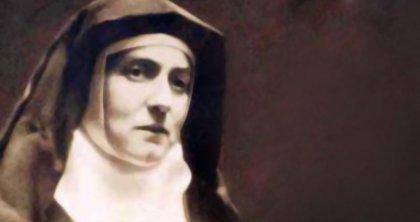
Edith Stein was born in Breslau, the capital of Prussian Silesia, on October 12, 1891, to a Jewish family of German stock. Brought up in the values of the Hebrew religion, at the age of 14 she abandoned the faith of her fathers and became agnostic. She studied philosophy in Göttingen, becoming a disciple of Edmund Husserl, the founder of the phenomenological school.
She has a reputation as a brilliant philosopher. In 1921 she converted to Catholicism, receiving baptism in 1922. She taught for eight years in Speyer (from 1923 to 1931). In 1932 she was called to teach at the Pedagogical Institute of Münster, Westphalia, but her activity was suspended after about a year because of the racial laws.
In 1933, following a long-cherished desire, she entered the Cologne Carmel as a postulant. She took the name of Sister Teresa Benedicta of the Cross. On 2nd of August 1942, she was taken by the Gestapo and deported to the Auschwitz-Birkenau extermination camp, where she died in the gas chamber on 9th of August.
The beatification ceremony was held on May 1st, 1987. The solemn ceremony of canonization on October 11, 1998. In 1999 she was declared, with St. Bridget of Sweden and St. Catherine of Siena, a Co-patroness of Europe.
Procedure - Teresa Benedetta della Croce
1. The canonical norms concerning the procedure to be followed in the Causes of Saints are stated in the Apostolic Constitution Divinus Perfectionis Magister promulgated by John Paul II on 25 January 1983 (AAS LXXV, 1983, 349-355).
2. To initiate a Cause it is necessary that at least five years pass after the death of the candidate. This is to allow for greater balance and objectivity in the evaluation of the case and to allow the emotions of the moment to decant. There must be a clear conviction among people about his/her sanctity (fama sanctitas) and about the efficacy of his/her intercession with the Lord (fama signorum).
Links - Teresa Benedetta della Croce
Documentation [Teresa Benedetta della Croce]
PLEASE NOTE
1) In order to be able to consult the Positio please fill in the request form on this page.
2) If your request is accepted, we will then send you the conditions and directions for consulting the document.
[No form id or name provided!]
Raffaele di San Giuseppe (Kalinowski)
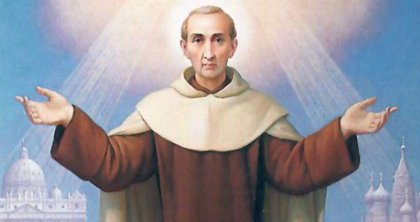
Joseph Kalinowski was born in Vilnius, Lithuania, in 1835,
He was a military engineer and captain of General Staff. He worked on building railways and fortresses. He participated, albeit reluctantly, in the Polish-Lithuanian uprising against the Russians. Because of this, he was condemned to forced labour in Siberia, where he brought with him the Gospel, the «Imitation of Christ» and a crucifix, comforting those whom he met. Finally set free, he entered the Carmel of Graz at the age of forty-two. Having become Br Raphael of Saint Joseph, he went to Poland, to Czerna, where he spent his days exercising the ministry of Confession for hours upon hours. He would have liked to stay there, but his Order called him to found new communities in the country.
The last one to be founded was in Wadowice, where he died in 1907.
The beatification ceremony was held on June 22, 1983. The solemn ceremony of canonization on November 17, 1991.
Last News

Venerable Jean-Thierry of the Child Jesus and the …
June 17, 2026

Venerable Maria Eletta di Gesù
June 17, 2026

Venerable Maria Teresa of the Most Holy Trinity (Y…
June 17, 2026

Blessed Anna of Saint Bartholomew
June 10, 2026

Martyrs of Santander
May 27, 2026
