



Procedure - Maria Teresa della SS. Trinità (Aycinena)
1. The canonical norms concerning the procedure to be followed in the Causes of Saints are stated in the Apostolic Constitution Divinus Perfectionis Magister promulgated by John Paul II on 25 January 1983 (AAS LXXV, 1983, 349-355).
2. To initiate a Cause it is necessary that at least five years pass after the death of the candidate. This is to allow for greater balance and objectivity in the evaluation of the case and to allow the emotions of the moment to decant. There must be a clear conviction among people about his/her sanctity (fama sanctitas) and about the efficacy of his/her intercession with the Lord (fama signorum).
Chiara Maria di Gesù
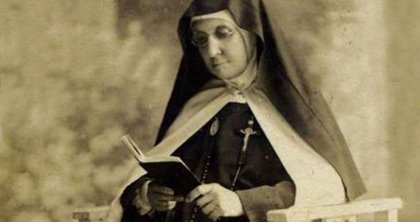
Clare of Carmel was born in San Miguel, El Salvador, on October 12, 1857 to Carmen López and Daniel Quirós López. Her parents decided to consult the saints to choose the name of their daughter and discovered that the day was dedicated to Saint Clare of Assisi, so they did not hesitate to call her Clare of Carmel.
On October 31 of the same year, she received the sacrament of baptism in the church of Santo Domingo. When she was one year old, her parents separated and the girl was taken to Santa Tecla, a municipality in the La Libertad department of El Salvador, where she lived until her death.
In 1872, at the age of 15 and at the request of her mother, Chiara married the Costa Rican Félix Alfredo Alvarado, with whom she had six children; but at the birth of the last child she was abandoned by her husband. As a teenager, Clare was involved in church affairs. Over the years, she carried out humanitarian works and made known to other women the importance of serving God, the Virgin and their neighbour.
Seeing her charitable virtues, Monsignor Antonio Adolfo Pérez y Aguilar, Archbishop of San Salvador, allowed her to use the premises of the Belén monastery (the current Belén school in Santa Tecla) to work with poor and abandoned girls, declaring her, after she had set out on the path of a religious, as mother superior Clare Mary of Jesus.
On October 14, 1916, she founded the Third Order of the Discalced Teresan Carmelites of Saint Joseph. At the suggestion of Fr. Luke of Mary most Holy, former General of the Order of Carmel, the congregation took the name of Tertiary Carmelites of St. Joseph.
She died on December 8, 1928. Her remains are buried in the chapel of the Belén school.
On October 31, 2008, the decree of validity was granted to the Diocesan Inquiry into her «life, virtue and reputation of holiness».
Procedure - Chiara Maria di Gesù
1. The canonical norms concerning the procedure to be followed in the Causes of Saints are stated in the Apostolic Constitution Divinus Perfectionis Magister promulgated by John Paul II on 25 January 1983 (AAS LXXV, 1983, 349-355).
2. To initiate a Cause it is necessary that at least five years pass after the death of the candidate. This is to allow for greater balance and objectivity in the evaluation of the case and to allow the emotions of the moment to decant. There must be a clear conviction among people about his/her sanctity (fama sanctitas) and about the efficacy of his/her intercession with the Lord (fama signorum).
Documentation [Chiara Maria di Gesù]
PLEASE NOTE
1) In order to be able to consult the Positio please fill in the request form on this page.
2) If your request is accepted, we will then send you the conditions and directions for consulting the document.
Links - Chiara Maria di Gesù

Maria Teresa della SS. Trinità (Ysseldijk)
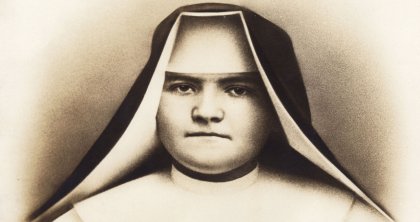
Teresa Ysseldijk was born on November 13, 1897, in Apeldoorn, the Netherlands, the daughter of a Catholic family full of faith. After a stay of 6 years in Ochtrup, Germany, where her father died, she lived with her family in Enschede until she entered the convent.
Teresa suffered a lot during her childhood and began very early in life to love her suffering. From her pious mother she learned to love the Mother of God and the Sacred Heart of Jesus. When her health improved, she asked to enter the Carmel of the Divine Heart of Jesus. She entered the convent in Tilburg on October 2, 1917, takin the name of Sr Mary Teresa of the Most Holy Trinity. She professed her vows on July 2, 1919. Driven by a great zeal for the missions, she travelled to the USA with seven other sisters in December 1919.
Shortly after her arrival in the new world, she was stricken with an illness, a serious kidney disease, discovered too late by doctors. She endured this further suffering for five years in the convent of St. Charles, Missouri, with indescribable patience and a smile on her lips. She wanted to serve God in the Order, working in silent union with Him.
When work was no longer possible, she bore her pain in silence, hidden from the world.
She died a holy death on March 10, 1926, in St. Mary's Hospital in St. Louis.
On November 12, 2015, the decree of validity was granted to the Inquiry on her «life, virtue and reputation of holiness».
Procedure - Maria Teresa della SS. Trinità (Ysseldijk)
1. The canonical norms concerning the procedure to be followed in the Causes of Saints are stated in the Apostolic Constitution Divinus Perfectionis Magister promulgated by John Paul II on 25 January 1983 (AAS LXXV, 1983, 349-355).
2. To initiate a Cause it is necessary that at least five years pass after the death of the candidate. This is to allow for greater balance and objectivity in the evaluation of the case and to allow the emotions of the moment to decant. There must be a clear conviction among people about his/her sanctity (fama sanctitas) and about the efficacy of his/her intercession with the Lord (fama signorum).
Links - Maria Teresa della SS. Trinità (Ysseldijk)
Documentation [Maria Teresa della SS. Trinità (Ysseldijk)]
PLEASE NOTE
1) In order to be able to consult the Positio please fill in the request form on this page.
2) If your request is accepted, we will then send you the conditions and directions for consulting the document.
[No form id or name provided!]
Elisabetta della Beata Vergine Maria
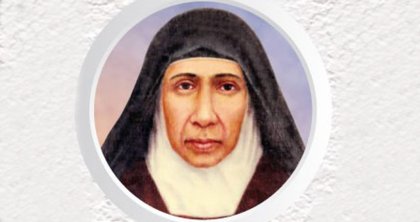
ELISWA (ELIZABETH VAKAYIL)
Eliswa was born in October 1832. She was the eldest of eight in a rich religious family from Vypussery (name of family residence) in Ochanthuruth.
At the age of 16, Eliswa (the Malayalam version of Elizabeth), married Vareed Vakayil, an elderly business man from Koonammavu, near Varapuzha. The Vakayil family was traditionally involved in chukku and other business matters but had also administration control over huge territorial lands in Koonammava.
On the death of her husband, according to custom at the time, the rich widow Eliswa should have remarried. She refused all such proposals and spent her time in prayer and care of the poor. She lived in a simple hut with a straw roof, built near the Vakayil home in Koonammavu.
In 1862, Eliswa shared her desire to serve God with her Parish priest, a young Italian called Fr. Leopoldo. In 1866, the first nuns in Kerala founded the Congregation of Carmelite Teresians (CTC) under the TOCD. The first convent was a simple bamboo dwelling in Koonammavi, on land once administered by Vareed Vakayil. The new Congregation, under Mother Eliswa, had the mission of teaching girls who were without any means of having a proper education. St. Joseph’s LP school in Koonammavu was the first Catholic school for girls in Malabar and Mother Eliswa’s new mission in life became that of teaching young girls.
Following on the separation of the Latin and Syrian Rites in the Church, the school transferred to Varapuzha and St. Joseph’s School for the girls of Varapuzha was established.
Mother Eliswa died on 18 July 1913.
The Diocesan tribunal of investigation on the “life, virtues and apparent sanctity” of Eliswa closed on 5 November 2014 and the Decree of Validity was issued on 7 April 2017.
Last News

Venerable Jean-Thierry of the Child Jesus and the …
June 17, 2026

Venerable Maria Eletta di Gesù
June 17, 2026

Venerable Maria Teresa of the Most Holy Trinity (Y…
June 17, 2026

Blessed Anna of Saint Bartholomew
June 10, 2026

Martyrs of Santander
May 27, 2026
