



Procedure - Francesco di Gesù Maria Giuseppe (Palau)
1. The canonical norms concerning the procedure to be followed in the Causes of Saints are stated in the Apostolic Constitution Divinus Perfectionis Magister promulgated by John Paul II on 25 January 1983 (AAS LXXV, 1983, 349-355).
2. To initiate a Cause it is necessary that at least five years pass after the death of the candidate. This is to allow for greater balance and objectivity in the evaluation of the case and to allow the emotions of the moment to decant. There must be a clear conviction among people about his/her sanctity (fama sanctitas) and about the efficacy of his/her intercession with the Lord (fama signorum).
Maria Mercede del Cuore di Gesù
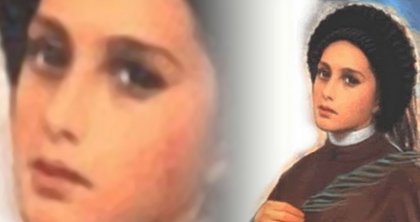
Nacque a Barcellona il 6 marzo 1880, in una famiglia cristiana, un fratello era un sacerdote.
Frequentò sin da piccola le religiose della Compagnia di s. Teresa dove nella loro Casa-madre ricevette la Prima Comunione. Rimasta orfana, intraprese gli studi in Belle Arti, mentre si dedicava alle opere di carità e mortificazione, fu catechista generosa delle giovani operaie e delle domestiche alle quali insegnava pure a leggere e scrivere.
Nel 1905 entrò nella Compagnia di s. Teresa aggiungendo al suo nome Mercedes quello del s. Cuore di Gesù. Fece la sua professione il 10 maggio 1907. Insegnò in vari collegi della Compagnia, ricoprendo man mano incarichi di responsabilità sempre espletati nella stima e apprezzamento di tutti.
Nel 1920 venne trasferita a s. Gervasio di Barcellona e lì fu sorpresa dalla rivoluzione della guerra civile spagnola nel luglio 1936. Rifugiatosi con un gruppo di consorelle in una casa privata, il 23 luglio ebbe l’ordine di raggiungere la casa di una sorella insieme a suor Gioacchina Miguel.
Per la strada furono intercettate e riconosciute come religiose, cosa che lei confermò subito e portate in una casa dove erano già altre religiose e un giovane religioso. Fu sottoposta a simulazione di fucilazione e vari maltrattamenti e nella notte del 24 fu portata insieme agli altri sulla via “Rebassada”, sempre nel circondario di Barcellona e lì fucilati.
Ferita a morte sopravvisse alcune ore fra dolori immensi sopportati con la preghiera sulle labbra, l’ultima fu il ‘Padre nostro’ poi i suoi lamenti furono uditi dal miliziani che ripassavano per quel posto e le spararono di nuovo, morì dissanguata per le ferite.
La suora Gioacchina Miguel nonostante fosse stata fucilata con lei, poté sopravvivere e diventare così una testimone efficace del martirio, quando le chiuse gli occhi vide in essa ‘un angelo di dolore’.
Il decreto sul martirio è stato promulgato il 21 dicembre 1989. La cerimonia della beatificazione si è tenuta il 29 aprile 1990.
Documentation [Maria Mercede del Cuore di Gesù]
PLEASE NOTE
1) In order to be able to consult the Positio please fill in the request form on this page.
2) If your request is accepted, we will then send you the conditions and directions for consulting the document.
Links - Maria Mercede del Cuore di Gesù

Procedure - Maria Mercede del Cuore di Gesù
1. The canonical norms concerning the procedure to be followed in the Causes of Saints are stated in the Apostolic Constitution Divinus Perfectionis Magister promulgated by John Paul II on 25 January 1983 (AAS LXXV, 1983, 349-355).
2. To initiate a Cause it is necessary that at least five years pass after the death of the candidate. This is to allow for greater balance and objectivity in the evaluation of the case and to allow the emotions of the moment to decant. There must be a clear conviction among people about his/her sanctity (fama sanctitas) and about the efficacy of his/her intercession with the Lord (fama signorum).
Maria Eugenio di Gesù Bambino
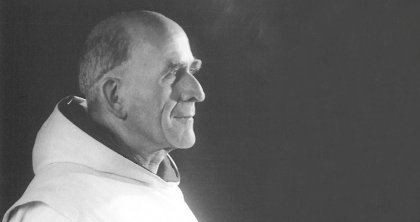
Henri Grialou (his secular name) was born into a modest mining family in Aveyron, in central France. Attracted by God from an early age, he wanted to be a priest. In the minor seminary he discovered the little Therese of the Child Jesus. It was then 1908, he was 13 years old: he was touched in a decisive way by this supernatural friendship, which would influence his life and his mission.
At the major seminary he discovered St. John of the Cross and felt strongly impressed by the Spanish Carmelite reformer of the sixteenth century: he understood that he was called to follow him and resembled him. On his deathbed he confessed: «In the depths of my soul, it is with Saint John of the Cross that I live».
This was how he entered the Carmelite novitiate just after his priestly ordination, in February 1922. There, he learned to know Teresa of Avila, the great reformer of Carmel, and found in her the mother of the spiritual.
1923, 1925, 1926, was the period of the beatification and canonization of Thérèse of Lisieux, then of the proclamation of John of the Cross as a Doctor of the Church. Our young Carmelite (28-31 years old) preached a lot in different French circles and perceived everywhere, especially among the laity, a spiritual thirst that found an adequate response in the teaching of Carmel. He then understood that his mission was to «lead souls to God» and to form them in the union of contemplation and action, showing them the path of prayer and life in the Spirit.
1929. Some young women who wanted to give themselves to God asked him to guide them. They gradually realized the thought that he had, of forming a group where action and contemplation in the world were united, to bring God where people do not know him. The donation of the sanctuary of Notre-Dame de Vie, in Provence (Venasque), allows him to begin his work. The Institute of Our Lady of Life was born (1923).
1937: Father Maria Eugenio was elected Definitor General of the Carmelites in Rome and remained so for 17 years, until the Chapter of 1955. It was during this period in Rome that Pius XII appointed him Apostolic Visitator of the Carmelite Nuns of France and asked him to unite them in a federation. A tireless worker, he also found time to publish in two volumes his masterpiece "I want to see God" (1949-1951).
In 1955 he returned to France, where he was able to take care more closely of his foundation, without forgetting his Carmelite province of Avignon, since he was exercising his third mandate as provincial of the Carmelites, when he died on March 27, 1967.
The beatification ceremony was held on November 19, 2016.
Procedure - Maria Eugenio di Gesù Bambino
1. The canonical norms concerning the procedure to be followed in the Causes of Saints are stated in the Apostolic Constitution Divinus Perfectionis Magister promulgated by John Paul II on 25 January 1983 (AAS LXXV, 1983, 349-355).
2. To initiate a Cause it is necessary that at least five years pass after the death of the candidate. This is to allow for greater balance and objectivity in the evaluation of the case and to allow the emotions of the moment to decant. There must be a clear conviction among people about his/her sanctity (fama sanctitas) and about the efficacy of his/her intercession with the Lord (fama signorum).
Documentation [Maria Eugenio di Gesù Bambino]
PLEASE NOTE
1) In order to be able to consult the Positio please fill in the request form on this page.
2) If your request is accepted, we will then send you the conditions and directions for consulting the document.
[No form id or name provided!]
Links - Maria Eugenio di Gesù Bambino
Giovanna Maria Condesa Lluch
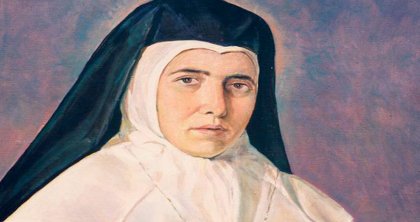
BLESSED GIOVANNA MARIA CONDESA LLUCH
Giovanna Maria Condesa Lluch was born in Valencia, Spain on 30 March 1862. When only 18, she discovered that God’s will for her was to dedicate herself and her life to service for the Kingdom of God, through evangelization and in helping working women.
In 1884, having overcome certain difficulties presented by the Archbishop who thought she was too young to found a Religious Congregation, Giovanna did get permission to open a house where she could welcome, educate and restore dignity to these working ladies. A few months later, she started a school for the daughters of these workers on the same premises.
She obtained diocesan approval for her Institute in 1892 and made her own Temporary Profession in 1985, followed by her Perpetual Profession in 1911. On 16 January 1916, God called her to her eternal reward.
The ceremony of her Beatification took place on 23 March 2003.
Last News

Venerable Jean-Thierry of the Child Jesus and the …
June 17, 2026

Venerable Maria Eletta di Gesù
June 17, 2026

Venerable Maria Teresa of the Most Holy Trinity (Y…
June 17, 2026

Blessed Anna of Saint Bartholomew
June 10, 2026

Martyrs of Santander
May 27, 2026
