



Maria Giuseppe di Gesù (Honorina)
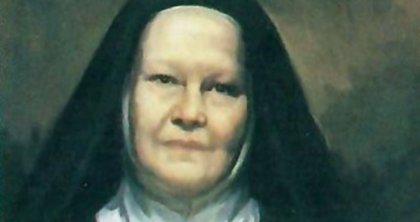
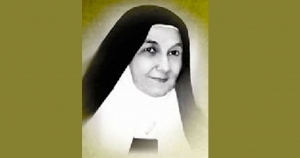
Honorina de Abreu was born in Rio de Janeiro (Brazil) on February 18, 1882.
She lost her mother at the age of 9. Young, beautiful and intelligent, Honorina shone in Rio in the society of that time! But at the age of 20, in the middle of a party, she suddenly felt compelled to leave the room and go home. Something had happened within her: it was the sign of her conversion.
At the age of 29, she entered the convent of the Discalced Carmelites of Saint Teresa, with the religious name of Sister Mary Joseph of Jesus. After only six years of religious life, she was elected Prioress, a fact that recurred many times. She guided the souls entrusted to her with great wisdom. She gave new vigour to the monastery and contributed to the foundation of other houses. She translated several Carmelite books into Portuguese. She wrote several poems and left countless letters. In her last years, her health was a challenge and she suffered a martyrdom in her soul.
She died on March 11, 1959.
On March 6, 1993, the decree of validity was granted to the diocesan process on her «life, virtue and reputation for holiness».
Procedure - Maria Francesca dello Spirito Santo
1. The canonical norms concerning the procedure to be followed in the Causes of Saints are stated in the Apostolic Constitution Divinus Perfectionis Magister promulgated by John Paul II on 25 January 1983 (AAS LXXV, 1983, 349-355).
2. To initiate a Cause it is necessary that at least five years pass after the death of the candidate. This is to allow for greater balance and objectivity in the evaluation of the case and to allow the emotions of the moment to decant. There must be a clear conviction among people about his/her sanctity (fama sanctitas) and about the efficacy of his/her intercession with the Lord (fama signorum).
Links - Maria Francesca dello Spirito Santo

Documentation [Maria Francesca dello Spirito Santo]
![Documentation [Maria Francesca dello Spirito Santo]](/media/k2/items/cache/d2ba94f3222b824cf3568813b993f00a_Generic.jpg)
PLEASE NOTE
1) In order to be able to consult the Positio please fill in the request form on this page.
2) If your request is accepted, we will then send you the conditions and directions for consulting the document.
Maria Francesca dello Spirito Santo
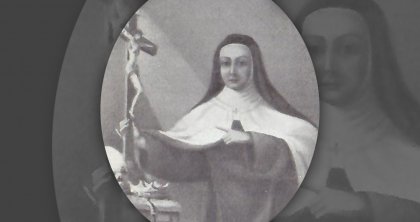
Eleonora d’Este was born on the 2nd of January 1643 in Modena (Italy).
Her fortunate parents were Prince Francis I, Duke of Modena (who succeeded his father «Alfonso III d'Este» in the Duchy, who had abdicated to become a Capuchin) and Princess Maria Farnese, daughter of Ranuzio I, Duke of Parma. Eleonora was a first cousin of Princess Caterina Farnese of Parma, who also wore the Habit of the Discalced Carmelite nuns, but in the Monastery of St. Teresa in Parma, taking the name of Sister Teresa Margherita of the Incarnation: a chosen, heroic soul, full of the Spirit of God, whose holy life was all a heavenly perfume (1637 1684).
Baptized in the Court Chapel on the same day she was born, she had her uncle Cardinal Rinaldo d'Este as godfather. Her most pious mother offered her, as soon as she was born, to Our Lady Most Holy. Educated in a Christian way and nourished by true and firm piety, she grew up at Court in age, grace and in virtue. In her was an angelic purity, a very ardent love for Jesus, a very tender devotion to Our Lady, a study of perfection to the full extent, with constant mortification of body and spirit, an inexhaustible charity towards her neighbour, so that she came to be called «Mother of the poor». To the insistent King of England who wanted her to be his spouse, she responded with a polite, but firm refusal. On May 3rd, 1674, she left the Court, entered the Discalced Carmelites of Modena and wore the Religious Habit, taking the name of Sister Maria Francesca of the Holy Spirit.
She was 31 years old. Entering the Monastery, she said to the nuns: «Let them do with me whatever they want». And she kept her word with perfect consistency. The hard life of the Teresian Carmel she embraced, indeed lived it in its full rigor. She exercised all the virtues to the highest degree, so as to be an example and an encouragement to the Sisters. But two virtues stood out in her in a way that was entirely special and that seemed a prodigy: humility and obedience; precisely the two virtues in her that, because of her origin, her blood and habits of life, should have found less suitable ground.
A woman of uncommon intelligence, of tenacious will, of singular prudence, of broad views, and of a truly maternal heart, she was repeatedly called by her superiors to govern the community. And her governance was always wise. It was said of her that in addition to being a great Saint, she was also able, because of her prudence, to govern an empire. Such was the esteem she enjoyed, that lay people and ecclesiastics resorted to her for counsel.
The Venerable Mother Mary Frances of the Holy Spirit crowned her saintly life with a most holy death on February 24th, 1722, at 79 years of age.
The Diocesan Inquiry into her «Life, Virtue and Reputation for Holiness» closed in 1729.
Procedure - Maria della Concezione di San Giacomo e Santa Teresa
1. The canonical norms concerning the procedure to be followed in the Causes of Saints are stated in the Apostolic Constitution Divinus Perfectionis Magister promulgated by John Paul II on 25 January 1983 (AAS LXXV, 1983, 349-355).
2. To initiate a Cause it is necessary that at least five years pass after the death of the candidate. This is to allow for greater balance and objectivity in the evaluation of the case and to allow the emotions of the moment to decant. There must be a clear conviction among people about his/her sanctity (fama sanctitas) and about the efficacy of his/her intercession with the Lord (fama signorum).
Links - Maria della Concezione di San Giacomo e Santa Teresa
Documentation [Maria della Concezione di San Giacomo e Santa Teresa]
![Documentation [Maria della Concezione di San Giacomo e Santa Teresa]](/media/k2/items/cache/451bf7d0eb68e09e196cbaba47814353_Generic.jpg)
PLEASE NOTE
1) In order to be able to consult the Positio please fill in the request form on this page.
2) If your request is accepted, we will then send you the conditions and directions for consulting the document.
[No form id or name provided!]
Maria della Concezione di San Giacomo e Santa Teresa
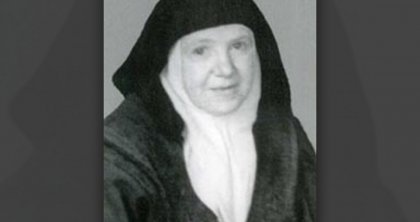
Maria of the Conception was born on April 25, 1905 in Palma de Mallorca (Balearic Islands, Spain). She had everything you could want: wealth, comfort, influence in society... passionate about reading, cinema and sports. At the age of 22 she fell radically in love with Jesus. She entered Carmel the following year. For Him she left everything. Right from the first moment, she imbued herself with holiness by observing the Rule and the Constitutions, with a constant and increasing effort «without mitigation, until death».
She consecrated herself to the Heart of Jesus and in him made her dwelling place. There she found unalterable peace and joy of heart, changing her will and comfort to collaborate in the redemptive work of her Beloved.
A mirror of humility and total forgetfulness of self; a good mother to all, always willing to help others in any need, she hid in the night of common life up to making her generous donation connatural and sweet. Her tranquillity was easily noticed, it radiated peace around her.
After living 70 «immensely happy» years in Carmel, she gave her soul to God at the age of 93, on February 7, 1999. Her death was accompanied by signs and graces.
The Diocesan Inquiry into her «Life, Virtue and Reputation for Holiness» was opened on December 21, 2009 in the Diocese of Mallorca.
Procedure - Maria Cristina di Gesù Sacramentato
1. The canonical norms concerning the procedure to be followed in the Causes of Saints are stated in the Apostolic Constitution Divinus Perfectionis Magister promulgated by John Paul II on 25 January 1983 (AAS LXXV, 1983, 349-355).
2. To initiate a Cause it is necessary that at least five years pass after the death of the candidate. This is to allow for greater balance and objectivity in the evaluation of the case and to allow the emotions of the moment to decant. There must be a clear conviction among people about his/her sanctity (fama sanctitas) and about the efficacy of his/her intercession with the Lord (fama signorum).
Last News

Venerable Jean-Thierry of the Child Jesus and the …
June 17, 2026

Venerable Maria Eletta di Gesù
June 17, 2026

Venerable Maria Teresa of the Most Holy Trinity (Y…
June 17, 2026

Blessed Anna of Saint Bartholomew
June 10, 2026

Martyrs of Santander
May 27, 2026
